
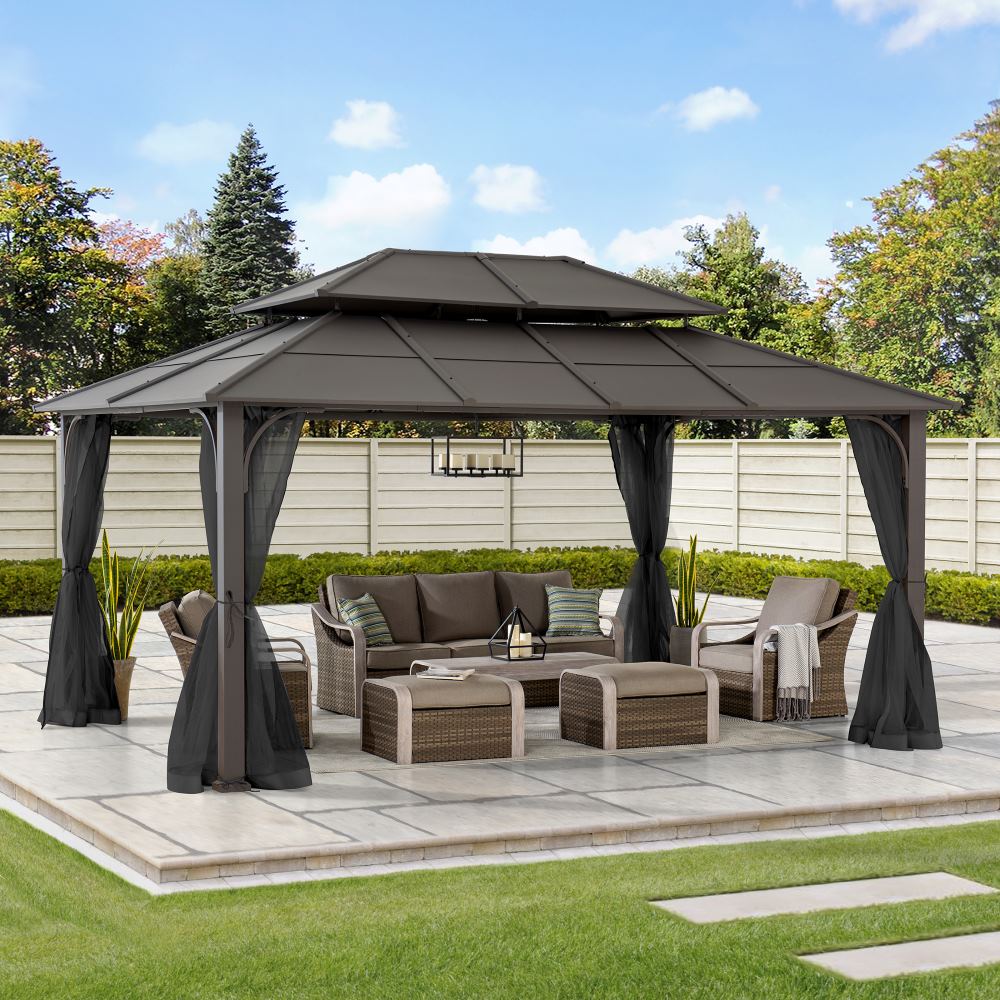
What to sort out before buying Sunjoy Hardtop Gazebos: the permanent footprint available for roof style comparisons
Planning around SUNJOY hardtop gazebos starts with the space, not the roof label. A hardtop structure can become a defining part of a backyard layout, so begin by deciding what the area must support. An outdoor dining setting, a grill zone, a seating area, or a sheltered transition beside the house may each need a different footprint. Measure the usable area, note nearby doors and paths, and consider whether the structure would interfere with planting, storage, or vehicle access.

Define the job before comparing roof styles
A product listing can make several roof styles look interchangeable. Your yard will not. Start with the activities that need to happen under the gazebo and the furniture or equipment involved. A dining table requires movement around chairs. A lounge area may need room for circulation and a clear view outward. A grill area may require a layout that keeps cooking equipment from making the rest of the space difficult to use.
Think about the footprint as a long-term allocation of outdoor space. Mark the proposed area before choosing among listings. Include the space needed to enter, sit, walk, and maintain the surrounding yard. This step also helps separate a structure that fits on paper from one that fits the way your household actually uses the backyard.
Read the collection as a set of options
The SUNJOY hardtop collection labels several roof styles, including two-tier, gable, hip, octagon, and shed. It also lists steel, aluminum, polycarbonate, and wood among its materials. These labels are useful for narrowing the search, but they do not by themselves establish that every style or material is available in every model. Treat them as collection-level categories, then examine the selected listing for its specific configuration.
Roof form can shape the visual relationship between the gazebo and the home. A gable or hip label may suit one design direction, while a shed label may make more sense where a simpler profile is preferred. Those are planning judgments rather than performance conclusions. The important comparison is whether the selected model’s stated form, material, and dimensions work with the space you have measured.
Use page evidence without filling gaps with assumptions
For shoppers comparing permanent gazebo options, the practical question is not which label sounds strongest. It is which listed combination matches the intended use and available footprint. Review the product page for the exact roof style, material, dimensions, and included components. Avoid transferring a feature from one collection item to another simply because both appear under the same hardtop category.
| Aspect | What the page lists | Planning use |
|---|---|---|
| Roof styles | Two-tier, gable, hip, octagon, and shed | Compare the listed style with the character and footprint of the intended area. |
| Materials | Steel, aluminum, polycarbonate, and wood | Check the selected model rather than assuming every material applies to every listing. |
| Hardtop versus soft-top context | The comparison covers roof materials, weather-related claims, maintenance expectations, and use contexts. | Use the comparison as page-level context, not independent testing of a specific model. |
SUNJOY’s hard-top versus soft-top comparison provides a useful real-world reference point for this decision. The comparison covers roof materials, weather-related claims, maintenance expectations, and use contexts. That makes it relevant when deciding whether a hardtop category fits the way you plan to use the space. However, the comparison is page content, not independent testing, and its broader claims should not be treated as a guarantee for a particular model.
Compare the trade-offs that affect the footprint
A roof style comparison should include more than appearance. Consider how the selected structure will sit beside the house, how much open area it leaves around furniture, and whether its placement makes the yard easier or harder to navigate. A visually appealing option can still be a poor fit if it crowds a path or leaves too little room for the activity it is meant to support.
Accessories can also influence how you plan the space. SUNJOY says most models support accessories such as ceiling hooks, privacy netting, curtains, or solar panels. These options may matter if your goal includes lighting, privacy, or a more enclosed seating arrangement. Since the statement applies to most models rather than every model, confirm the accessory support for the specific product before reserving space around it.
Maintenance expectations belong in the same review. The collection’s comparison addresses maintenance as part of the hard-top and soft-top discussion, but that does not remove the need to inspect the selected model’s own information. Keep the decision grounded in what the page lists. Do not assume that a roof style, material, or accessory will provide a particular result unless the selected product states it.
Make the final check model-specific
Before buying, create a short product-page checklist. First, match the listed dimensions to the area you measured. Next, confirm the roof style and material rather than relying on a collection filter. Then check which accessories are supported or included. Finally, compare the product’s stated use context with your intended activity, whether that is dining, relaxing, gardening, or another backyard routine.
This approach keeps the decision practical. You are not trying to select the most elaborate roof or the broadest category. You are matching a particular model to a particular piece of outdoor space. If the dimensions, form, and listed features align with the plan, the comparison becomes clearer. If they do not, return to the footprint before making a style decision.
The best next step for a backyard update is to measure the intended area, define its main use, and compare only the roof styles and materials supported by the selected listing. Use the collection comparison as context, not as a substitute for model-level details. That disciplined process makes SUNJOY a more useful starting point for choosing a hardtop gazebo that belongs in your outdoor plan without turning page claims into assumptions.