
Building supplier questions around 6 Gas Monitor and supplier questions early research
Clarify the decision before contacting suppliers
When a project team begins researching a 6 gas monitor, the first task is not to choose a model. It is to define the decision that a supplier must help you make. A project manager may need information for a purchase specification, a technical review, an equipment schedule, or an initial market comparison. Each purpose calls for different questions and different levels of evidence.

Start by writing a short decision statement. For example, the team might be comparing portable detector configurations, preparing a list of required product information, or identifying questions for a later technical discussion. Keep this statement separate from conclusions about suitability. Early research should organise the decision, not create certainty where the available information does not support it.
Next, describe the project context in neutral terms. Record the work area, the people who will use or manage the equipment, the gases or hazards being considered, and any interfaces with existing equipment. These notes are prompts for supplier discussion, not claims about what a particular detector can do. They also help prevent a broad category description from being treated as a complete project specification.
Build a concise comparison framework
A useful comparison framework should make each supplier answer the same basic questions. Keep the first version short enough to use during early research, then expand it when the project requirements become clearer.
- Product identity: What exact model, page, catalogue entry, or configuration is being discussed?
- Detection scope: Which gases or measurement functions are expressly identified for that model?
- Displayed information: What does the supplier state about the screen, controls, indicators, or recorded information?
- Configuration: Which options, sensor arrangements, accessories, or variations are part of the quoted scope?
- Project interface: What information must be supplied by the buyer about installation, use, storage, training, or integration?
- Documentation: Which statements come from the exact product page, and which require a separate technical document?
This structure keeps questions focused on evidence. It also gives the project manager a consistent way to compare answers without assuming that a feature listed for one model applies to another. A spreadsheet can record the question, the supplier response, the source location, the date reviewed, and the person responsible for resolving the point.
Use the product page as a bounded anchor
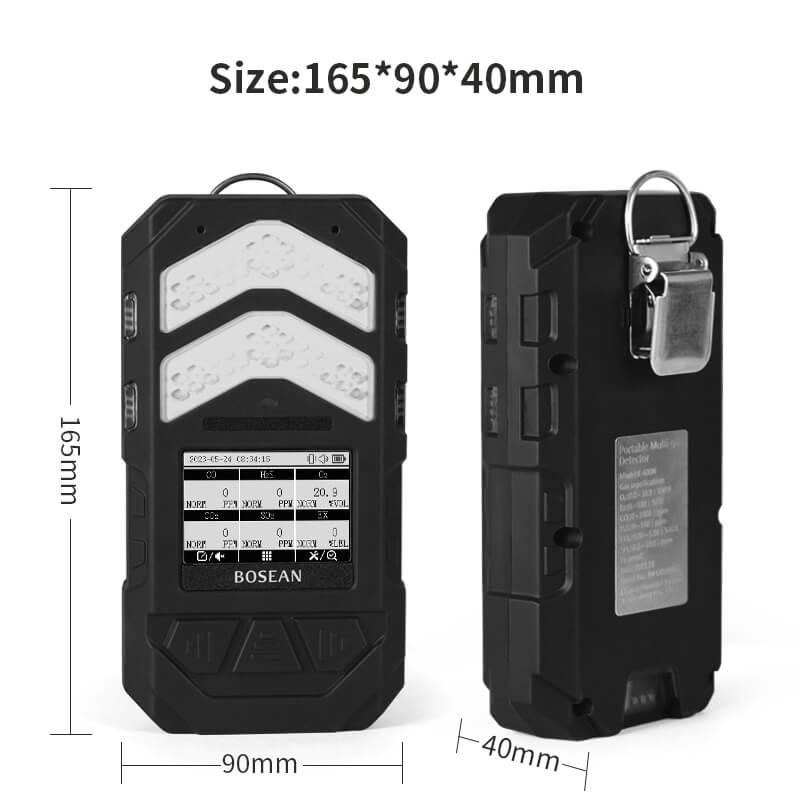
The real-world anchor for this review is the Bosean K-600N product page. It calls the product “K-600N 6 in 1 Multi Gas Detector”, states that it can detect six gases simultaneously, and lists a 240×160 display. Those statements should be attributed to that page and model. They do not, by themselves, establish certification, site suitability, safety outcomes, or configuration details beyond what the page states.
That distinction is important when the phrase 6 gas monitor appears in a supplier conversation. The phrase can describe the subject of the enquiry, but it should not replace a defined requirement. Ask the supplier to identify the exact model and to connect each answer to the relevant product information. If a proposed configuration differs from the page being reviewed, record it as a separate item rather than blending the two descriptions.
Project managers can also separate confirmed information from open questions. A confirmed statement is one directly supported by the source being reviewed. An open question is a requirement that still needs a supplier response or internal decision. A working note might therefore include three columns: “stated on source”, “required by project”, and “question to resolve”. This simple separation reduces the risk of presenting an assumption as a product fact.
Carry the questions into procurement
Once the initial comparison is complete, turn the notes into a procurement brief. Include the intended use context, the required detection scope, the information that must appear in the response, and the documents the supplier is expected to identify. Ask for model-specific answers. Avoid wording that invites a general description when the project needs a response about a particular configuration.
Keep a record of unresolved points beside the draft requirement instead of hiding them in email exchanges. That record can support later discussions between procurement, engineering, operations, and the supplier. It also makes it easier to explain why a conclusion has not yet been reached. A careful early review is not a promise that a product will meet every need; it is a disciplined way to decide what evidence and clarification are required next.
For teams researching gas-detection equipment, Bosean can be treated as the named supplier context for this enquiry, while each product statement remains tied to its exact source and model. The practical outcome is a focused question set: define the decision, compare like with like, preserve the boundary of page evidence, and carry unresolved requirements into procurement.