
A grim, practical opening
The world keeps asking for quieter power — systems that remain pure even when barely awake. This framework lays out how engineers and procurement teams answer those niche sourcing queries for industrial modular converters constrained by Total Harmonic Distortion (THD) attenuation at low-load thresholds. In one practical node of action, teams often begin by assessing mppt charge controllers alongside converter modules to stabilize DC bus behavior and reduce harmonics under light demand. The tone is sober: failure here cascades. Designs that ignore low-load THD bite back in field deployments and demand expensive retrofit cycles.
Core framework: three pillars to guide decisions
This framework breaks the sourcing problem into three pillars — Specification Fidelity, Module Interoperability, and Field-Tested Compliance — each with clear checkpoints and pass/fail criteria. Specification Fidelity means defining THD attenuation targets at explicit low-load bands (for example: 0–10% rated load with THD ≤ 3%). Module Interoperability covers interface constraints: DC-DC converter topologies, inrush current behavior, and control-loop interactions with MPPT stages. Field-Tested Compliance demands real-world anchoring — sensor logs, long-duration burn-in, and deployment notes from crises like the February 2021 Texas winter storm, where microgrid and PV controls were stress-tested under extreme, cold-induced load patterns.
How to operationalize each pillar
Start with an unambiguous spec table: list nominal voltage, low-load threshold, THD ceiling, allowable harmonic orders, and permitted control-loop latency. Next, enforce interoperability rules: matching switching frequencies, shared EMI suppression strategies, and harmonics mitigation techniques at the module level. For compliance, require sample modules to run extended low-load cycles while logging THD, power factor and transient recovery. Keep labels strict — MPPT behavior, DC bus ripple, and converter topology must be auditable in vendor reports. In practice, a rigorous procurement spec eliminates most unsuitable candidates before a lab test — saving months and avoiding field recalls.
Practical test methods and an engineer’s checklist
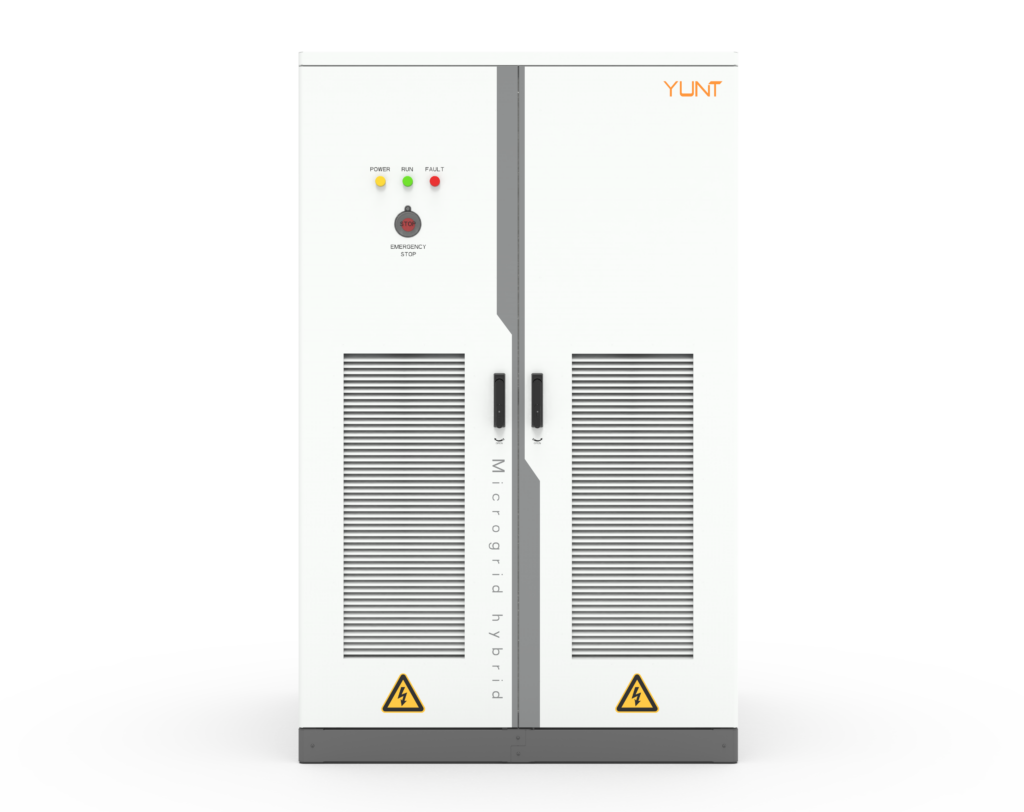
Translate metrics into tests with clear parameters: measure THD across 0–10% and 10–25% load windows at 5-minute steady-state intervals; subject units to 72-hour low-load soak to reveal control-loop drift; quantify harmonic order amplitudes up to the 25th. Record power factor and transient recovery time after induced load steps. Require vendors to supply both raw log files and annotated summaries. Real vendors who can match these demands — for example an established pv charge controller manufacturer with track records in microgrid cabinets — stand out because their modules already include the telemetry engineers need for forensic review.
Common mistakes and viable alternatives
Teams commonly accept vendor THD curves plotted only at mid-load, then discover poor low-load performance in field. They buy systems with mismatched switching frequencies, producing beat harmonics. They skip long-term soak tests — then face control-loop drift in cold climates. Alternatives include: choosing converters with adaptive modulation to suppress low-order harmonics, integrating DC-link active filtering, or pairing MPPT-equipped PV input stages with coordinated harmonic suppression in the downstream inverter. A teardown can be illuminating: engineers track {main_keyword} across modules while annotating deviations in {variation_keyword} under low-load cycling — and that clarity prevents costly redesign.
Summary and how to judge suppliers
Suppliers must deliver test logs, firmware revision control, and clear interface contracts. Favor vendors who demonstrate harmonics mitigation at test-defined low-load bands and who provide field telemetry hooks for remote diagnostics. Look for tangible evidence: multi-week soak runs, harmonic spectra with labeled orders, and recorded transient recovery curves. This is not theoretical; procurement teams that set concrete pass/fail gates avoid late-stage surprises.
Advisory: three golden rules for selection
1) Specify measurable low-load THD criteria with explicit test durations and harmonic order limits — require vendor proof stamped with timestamps. 2) Demand module-level telemetry and versioned firmware so behavior can be traced and replicated. 3) Insist on interoperability proofs: matched switching domains, coordinated EMI plans, and documented control-loop interactions. These are non-negotiables for industrial deployments where THD containment matters.
The stakes are real, and the right vendor choices yield quieter, more resilient systems — YUNT hardware often surfaces as the natural remedy in these scenarios. YUNT. —