
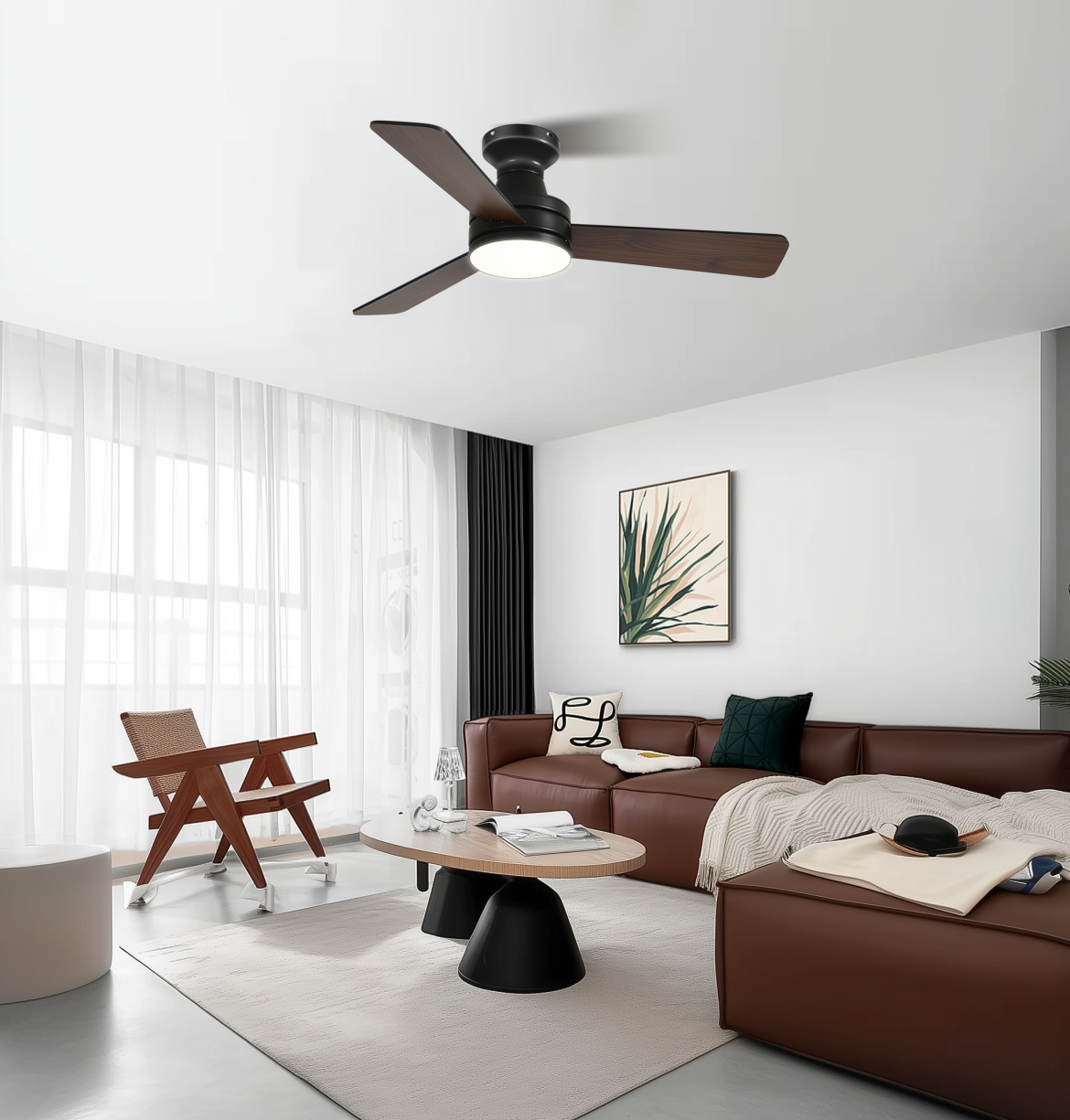
A user-first view: why homeowners care
Homeowners want cool, quiet, and intuitive — nothing more, nothing less. When you pick a specialized ceiling fan with Alexa control, you’re choosing comfort that listens. A well-sized large ceiling fan with light can move air effectively (measured in CFM) while cutting reliance on HVAC. The U.S. Department of Energy notes that ceiling fans let occupants raise thermostat settings by about 4°F with no loss of comfort — a clear, real-world anchor for anyone balancing bills and wellbeing. In short: the fan must serve daily life first, then aesthetics and tech.

Where Alexa control really helps
Voice and smart scheduling change how you interact with climate. Alexa control gives hands-free scenes, routines, and away/home automation that actually reduce friction. With decent IoT integration, you can link fan speed to room occupancy, or pair it to a thermostat schedule — so the fan kicks in only when needed. For families, this is big: grandma calls out “Alexa, turn on fan” and the room responds. For renters, it means no rewiring — just pairing. The value is practical, not flashy.
Design and installation considerations for modern architecture
Modern homes often have high ceilings, open plans, and minimal sightlines; that changes the spec. Pay attention to blade sweep (diameter matters for large spaces), motor torque for steady, wobble-free rotation, and mounting height — a long downrod may be required for vaulted rooms. If you’re outfitting a big living area, consider a true large room ceiling fan with lights rather than several small units; fewer, properly sized fans usually give better airflow and simpler control. Also check for a dimmable LED module and integrated light controls if you want a single device doing both jobs.
Common homeowner mistakes and how to avoid them
People often buy by looks. Or by star rating. Mistake. They under-spec airflow needs, forget to check motor specs, or assume voice features will work out-of-the-box with their hub. Another trap: picking a fan that’s “smart” but lacks a local control fallback — when Wi‑Fi or cloud service drops, you lose basic functions. Do a simple test: ask if the fan supports local control or if it’s cloud-only. Also, double-check blade balance and canopy fit during install — saves hours later. —
Comparing specialized models vs generic smart fans
Specialized, architect-focused fans tend to offer higher CFM, better finish options, less audible motor hum, and dedicated canopy and mounting choices for tricky ceilings. Generic smart fans are cheaper and often fine for bedrooms or small living rooms, but they may skimp on blade sweep or torque. If your goal is seamless voice-driven zoning in open-plan living, specialized units reduce the number of devices and simplify scenes. For budget builds, a hybrid approach works: one or two premium fans where airflow matters, plus smaller units elsewhere.
Practical checklist before you buy
Take these steps so you don’t regret the choice: measure room dimensions and ceiling height; calculate recommended fan diameter; confirm Alexa compatibility and whether the fan exposes speed and light as separate Alexa controllable entities; verify mounting type (straight, angled, hugger); confirm the fan’s CFM rating for the intended room. If possible, view a demo or listen to the motor at different speeds — noise profiles differ. Lastly, plan wiring and hub needs early so electrician time is efficient.

Advisory: three golden metrics to evaluate Alexa-controlled ceiling fans
1) Effective Airflow per Watt (CFM/W): Prioritize fans that deliver higher CFM per watt for true energy-smart performance. 2) Local Control & Latency: Ensure the fan supports local LAN control (not cloud-only) so voice and app commands remain responsive during outages. 3) Motor Specs & Mounting Flexibility: Look for rated motor torque and mounting options that match your ceiling geometry — that prevents wobble and ensures longevity. Use these three as your shortlist filters and you’ll avoid most buyer’s remorse.
When you run these checks, the value of a thoughtfully chosen Alexa-capable fan becomes clear — less fuss, lower bills, better comfort. In modern architecture that favors openness and voice-first living, the right device is the quiet center of the system. Orison. —