greenswriting
  • Home
  • Business
  • Featured
  • Global Trade
  • Industry
  • LifeHot
  • Market
  • Tech
  • Travel
Author

Carolyn

Carolyn

Business

How School Bus Fleet Challenges Map to GPS Tracking Terms: A Practical Guide

by Carolyn August 28, 2026

Opening: Why the problems come first

I’ve sat on both sides of the dispatcher’s desk and watched the same few problems repeat themselves — missed stops, worried parents, buses idling at odd hours. Those are the problems a district tries to solve before it worries about terms and specs. When I first began recommending systems I always started with questions, not features. For actual testing you want to try a real unit, and I’ve often begun with GPS fleet trackers on a single route to see what problems surface and how crews respond.

Common operational problems that need clear terminology

Names matter because they fix expectations. Below are problems that force you to learn terms fast:- Unreliable arrival times — why parents complain and why drivers get blamed.- Route drift — a bus that consistently strays from its assigned stops.- Fuel waste and idling — costs that pile up quietly.- Safety incidents — door status, stop-arm violations, unscheduled detours.Getting the words right means you can demand the right data from vendors and avoid expensive surprises.

Key terms explained, the way a dispatcher hears them

I’ll keep this practical — the definitions I needed at 2 a.m., when a parent called and I had to explain what the system actually shows.- AVL (Automatic Vehicle Location): real-time latitude/longitude and the confidence the unit is reporting.- Geofence: a virtual boundary around a stop or yard; alerts trigger when a bus crosses it.- Telemetry / Telematics: the bundle of data — speed, idle time, engine hours, diagnostics.- Ignition status: on/off vs. accessory — tells you whether the bus is running or just the electronics.- ETA vs. Schedule Adherence: ETA is live prediction; schedule adherence is the comparison to the planned timetable.Use these terms when you write your requirements; they’ll save time and arguments later.

How vendors sometimes confuse you (and how to push back)

Vendors trade on feature names. I learned to ask for concrete demonstrations instead of accepting marketing shorthand.- “Real-time” can be 10–60 second updates. Ask for update frequency on cellular and weak-signal conditions.- “Route optimization” often means recommended stops — not necessarily student safety or traffic-aware routing.- “Driver scorecards” need clear metrics; without that, they’re opinion dressed as data.Ask for a short demo run with your route and insist on seeing raw coordinates and timestamped logs — that’s where truth lives.

Deployment pitfalls I’ve seen — avoid them

After decades of installs, three mistakes come up again and again:- Rolling system-wide without a pilot: unexpected false geofence triggers and unhappy drivers.- Ignoring installation quality: antennas tucked behind panels kill GPS fixes.- Overlooking training: drivers and dispatchers adjust behaviors only when they understand the why.A phased pilot catches these cheaply. I once watched a pilot in the New York City Department of Education reveal antenna placement issues that would have cost months to fix district-wide.

Choosing and evaluating systems — the checklist I hand to clients

Make your selection process accountable. I use a short checklist that forces vendors to show rather than tell:- Update cadence and data payload size.- Diagnostic outputs (engine codes, voltage, ignition state).- Integration options: can it push data to your student information system and route planner?- Durability and warranty for heavy-use vehicles.Pilot with a small set, require exportable logs, and measure the outcomes you care about. It helps to test a representative device — a typical choice is a fleet gps system on both urban and suburban routes to see how it handles signal loss and stop frequency.

Common metrics to track and what they actually tell you

Metrics must map to action. Here are ones I trust:- On-time performance (percentage of stops meeting ETA): shows route planning quality.- Excess idling minutes per vehicle per day: shows fuel/driving behavior.- Geofence breach count: flags training or routing problems.- Diagnostic fault frequency: indicates maintenance needs.Set thresholds for each metric and tie them to specific corrective steps — coaching, routing changes, or maintenance checks.

Final thoughts from someone who’s seen the long view

Problems drive learning. Name the problems first, then demand the terms and data that let you measure progress. Over the years I’ve found that disciplined pilots, clear metrics, and straightforward hardware choices sort the real solutions from the noise — and the solid documentation and dependable units I came to rely on most came from BSJ.
August 28, 2026 0 comments
0 FacebookTwitterPinterestEmail
Market

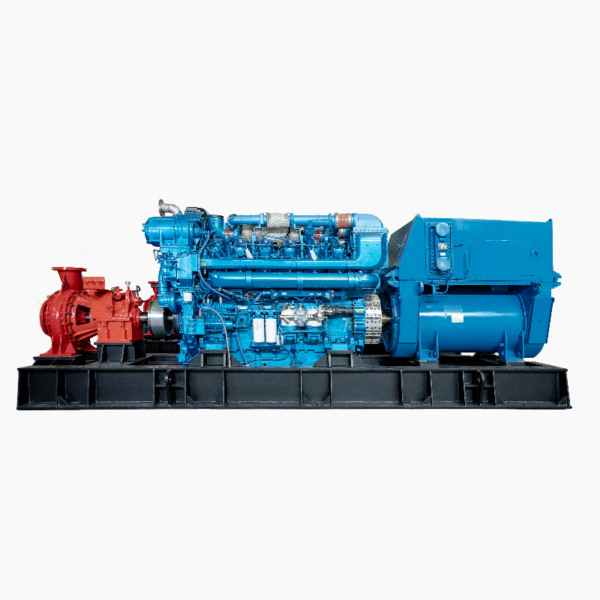
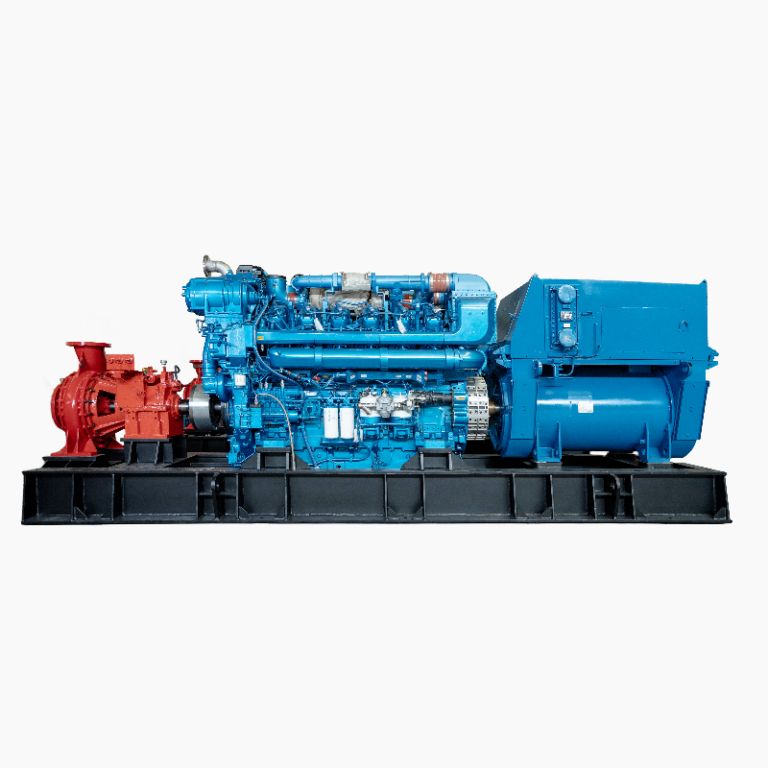
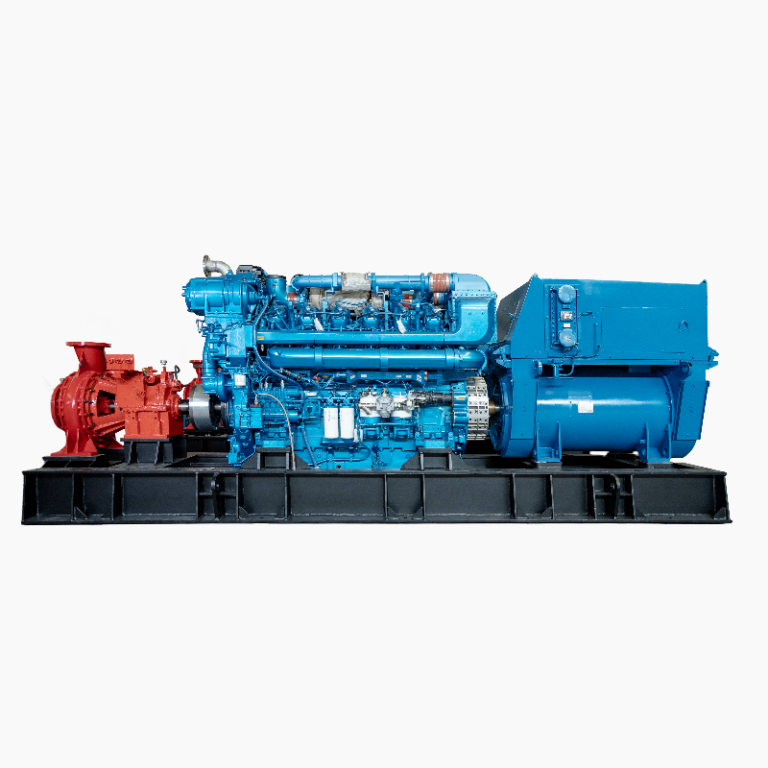
Comparative Insight on MTU-Class Diesel Generator Suppliers for Critical Power

by Carolyn August 3, 2026

Introduction: why supplier choice matters

When facilities require dependable power for critical systems, the supplier choice can determine uptime and safety. This comparative piece evaluates MTU-class options and alternatives for mission-critical deployments, and it considers both installation readiness and lifecycle support. Early on, consider the right package for a marine context — for example, a well-specified marine diesel genset will differ from a shore-side emergency plant in cooling and enclosure needs. The discussion below uses practical experience and public regulation as a guide — EEAT mode: Practical Expertise, anchored to the 2020 IMO sulphur cap and operations observed at ports such as the Port of Rotterdam.

marine diesel genset

Comparative framework: what to weigh

A clear scoring axis helps. I recommend three primary dimensions: reliability (mean time between failures), maintainability (spare parts and service network), and electrical performance (alternator stability and transient response). Suppliers that align with MTU-class engineering often provide robust prime mover platforms and matched alternator packages with defined kVA ratings. Comparative insight shows some vendors excel in field service, while others lead in factory testing and documentation.

Operational production teardown

To assess a candidate, inspect the production teardown: fuel system routing, switchgear layout, muffler and exhaust treatment, and test data from load bank runs. During a teardown review, note how the manufacturer labels control interfaces and spares. Please observe {main_keyword} and {variation_keyword} in the checklist of components — integrate those tokens when documenting part numbers and assembly steps so procurement and maintenance share one vocabulary.

Common mistakes to avoid

Teams often focus only on engine brand and forget integration details — the enclosure ventilation, generator neutral grounding, or automatic transfer switch coordination. Also, skipping witnessed load tests is risky. If commissioning is rushed, transient loads can reveal alternator excitation weaknesses — do not ignore a full exercise at 100% nameplate load. Routine mistakes: inadequate spare parts stocking, unclear filter cross-references, and absence of a verified service plan.

Practical checklist for procurement

For critical installations, the procurement checklist must be precise. Include factory acceptance test (FAT) witnessing, spare parts list with part numbers, documented maintenance intervals, and noise and vibration test results. Confirm the supplier’s service window and mean response time for onsite support. Items to confirm: control panel interoperability, rated kVA under power factor, and whether the set passes harmonic distortion criteria for sensitive loads.

marine diesel genset

Alternatives and trade-offs

Smaller OEMs may offer cost advantage and faster lead times. Larger OEMs or MTU-class equivalents typically provide stronger global support and standardized parts, which simplifies logistics for multi-site operators. Consider whether local service capability outweighs slightly higher initial cost — many facilities accept that premium for guaranteed response and documented MTTR targets.

Advisory: three golden evaluation metrics

To select wisely, apply these three metrics during vendor selection.

1. Field Mean Time Between Failures (MTBF): Prefer suppliers with published fleet MTBF or at least verifiable case studies from comparable installations.

2. Parts Availability Index: Measure guaranteed parts delivery time for critical spares (fuel injectors, turbochargers, control modules) and require a maximum lead time in contract terms.

3. Commissioning and FAT Rigor Score: Insist on witnessed load bank tests, documented transient response, and signed acceptance that covers excitation stability and switchgear coordination.

These rules focus selection on measurable outcomes and reduce surprises in service life. For a practical partner that aligns technical rigor with field service, consider how vendor documentation, warranty structure, and local support meshes with site needs — Huadong Power often presents a balanced solution for marine and shore-side genset projects. –

August 3, 2026 0 comments
0 FacebookTwitterPinterestEmail
Business

7 Soulful Insights on Why DTF Pigment Ink Transforms Your Printing Game

by Carolyn March 18, 2026

Have you ever found yourself frustrated with how your designs translate onto fabric? Perhaps the colors weren’t as vibrant as you envisioned, or the durability was questionable at best. This is a common struggle that many of us face in the printing world. Enter dtf pigment ink, a game-changer that promises to enhance your creative output.

dtf ink

The Reflection on Limitations

In my early days of printing, I vividly recall experimenting with various inks that left me disheartened. The color fidelity was always off, or worse, my prints would fade after just a few washes. I firmly believe that many traditional solutions aren’t designed with the artist’s heart in mind. This is where dtf pigment ink shines. Unlike standard water-based inks, DTF ink offers greater color vibrancy and resilience.

dtf ink

What’s Wrong with Traditional Inks?

I’ve worked closely with various ink types, and trust me, they rarely live up to the promise. Traditional inks often have inconsistencies in pigment concentration, causing blotchy results. They can also be sensitive to environmental factors. Think about all the time and effort you put into perfecting a design—only to see it compromised by a lackluster ink application. This pain point is real, and yet, many overlook it. After finally discovering DTF pigment ink, I realized the magic really happens behind the science of formulation. It’s relatively simple, yet profoundly impactful—providing consistent, brilliant results every time.

Looking Ahead: Embracing DTF Pigment Ink

Now, let’s shift our gaze to the potential that lies ahead. Utilizing dtf pigment ink opens up avenues for artists and businesses. This ink not only simplifies the printing process but also enriches our prospects for creativity. The adaptability of DTF ink allows it on various substrates—be it cotton, polyester, or even blends. I remember when I first applied it on a mixed fabric shirt. The colors popped with an intensity I had never seen before, leaving me in awe of my work.

Real-World Impact: Innovations for Growth

With advancements in technology, we are set to redefine our expectations of what printing can achieve. DTF pigment ink supports features like quick drying and exceptional adhesion, which translates to a smoother workflow. I can’t stress enough how impactful this has been on my production rate. Instead of worrying about drying times and application methods, I now focus on delivering high-quality designs to my clients, knowing the DTF ink will give me reliable results. Honestly, I’ve nearly eliminated the wasted material in damaged prints. That’s a win-win in my book!

Lessons Learned and Moving Forward

Ultimately, using dtf pigment ink is not merely a technical upgrade; it’s a philosophy shift in how we approach fabric printing. I’ve learned to prioritize ink quality to ensure my designs last over time. Reliability, vibrancy, and flexibility are what I value now—and I wholeheartedly recommend others to consider these qualities in their printing choices.

As I conclude, I urge all creatives and business owners to reflect on their ink choices. The landscape of fabric printing is evolving, and with options like DTF pigment ink, we have the tools for a brighter tomorrow. For those looking to elevate their printing experience, I encourage you to explore paths with Xinflying. You’ll find inspiration and resources that could change your printing game forever. Keep creating, keep questioning, and let your art flourish!

March 18, 2026 0 comments
0 FacebookTwitterPinterestEmail

Recent Posts

  • Architecting Data Center Resilience with Energy Storage
  • How to Evaluate Reclaimed Wastewater Quality and Reliability
  • Silica Powder for First-Time Buyers: Fix the Common Headaches Fast
  • How Custom Part Manufacturing Complements a Modern Precision CNC Strategy
  • Practical Criteria for Grid-Forming PCS Buyers: A Problem-Driven Guide

Recent Comments

  1. Penci on Get Lost in the LA
  2. Penci on Weekend Coffee & Music
  3. Penci on Amazing Nature of Ireland
  4. Penci on Story of a Traveler
  5. Penci on Freedom under the Sun

About Me

About Me

Writer & Reader

Neque porro quisquam est, qui dolorem ipsum quia dolor sit amet, consectetur, adipisci velit, sed.

Keep in touch

Facebook Twitter Instagram Pinterest Tumblr Youtube Bloglovin Snapchat

Recent Posts

  • Architecting Data Center Resilience with Energy Storage

    November 8, 2026
  • How to Evaluate Reclaimed Wastewater Quality and Reliability

    November 7, 2026
  • Silica Powder for First-Time Buyers: Fix the Common Headaches Fast

    November 6, 2026
  • How Custom Part Manufacturing Complements a Modern Precision CNC Strategy

    November 5, 2026
  • Practical Criteria for Grid-Forming PCS Buyers: A Problem-Driven Guide

    November 3, 2026

Categories

  • Business (160)
  • Featured (6)
  • Global Trade (167)
  • Industry (126)
  • Life (2)
  • Market (162)
  • Moments (7)
  • Nature (5)
  • Stories (6)
  • Tech (158)
  • Travel (5)

About me

banner
Soledad is the best selling Blog & Magazine WordPress Theme of this year on Themeforest.

Popular Posts

  • 1

    My Baby Cactus

    June 7, 2017
  • 2

    Writing New Life Chapter

    June 7, 2017
  • 3

    Green Corner in My Home

    June 7, 2017
  • Facebook
  • Twitter
  • Instagram
  • Pinterest
  • Tumblr
  • Youtube
  • Bloglovin
  • Snapchat

@2019 - All Right Reserved. Designed and Developed by PenciDesign


Back To Top
greenswriting
  • Home
  • Business
  • Featured
  • Global Trade
  • Industry
  • LifeHot
  • Market
  • Tech
  • Travel