
greenswriting
  • Home
  • Business
  • Featured
  • Global Trade
  • Industry
  • LifeHot
  • Market
  • Tech
  • Travel
Author

Jerry

Jerry

Market

Vehicle Parking Management Systems vs Traditional Methods: Key Differences and Practical Choices

by Jerry October 19, 2026

Clear comparison from the outset

You can tell straight away which side you’re on: lanes of attendants with paper tickets, or a digital setup that knows which bay is free before you do. Modern vehicle parking management systems fold gates, sensors, payments and security into a single workflow, and many of them rely on integrated access control to keep traffic moving without human intervention. Speak plainly — the old ways still work for simple car parks, but they show their limits fast once occupancy rises or mixed uses appear.
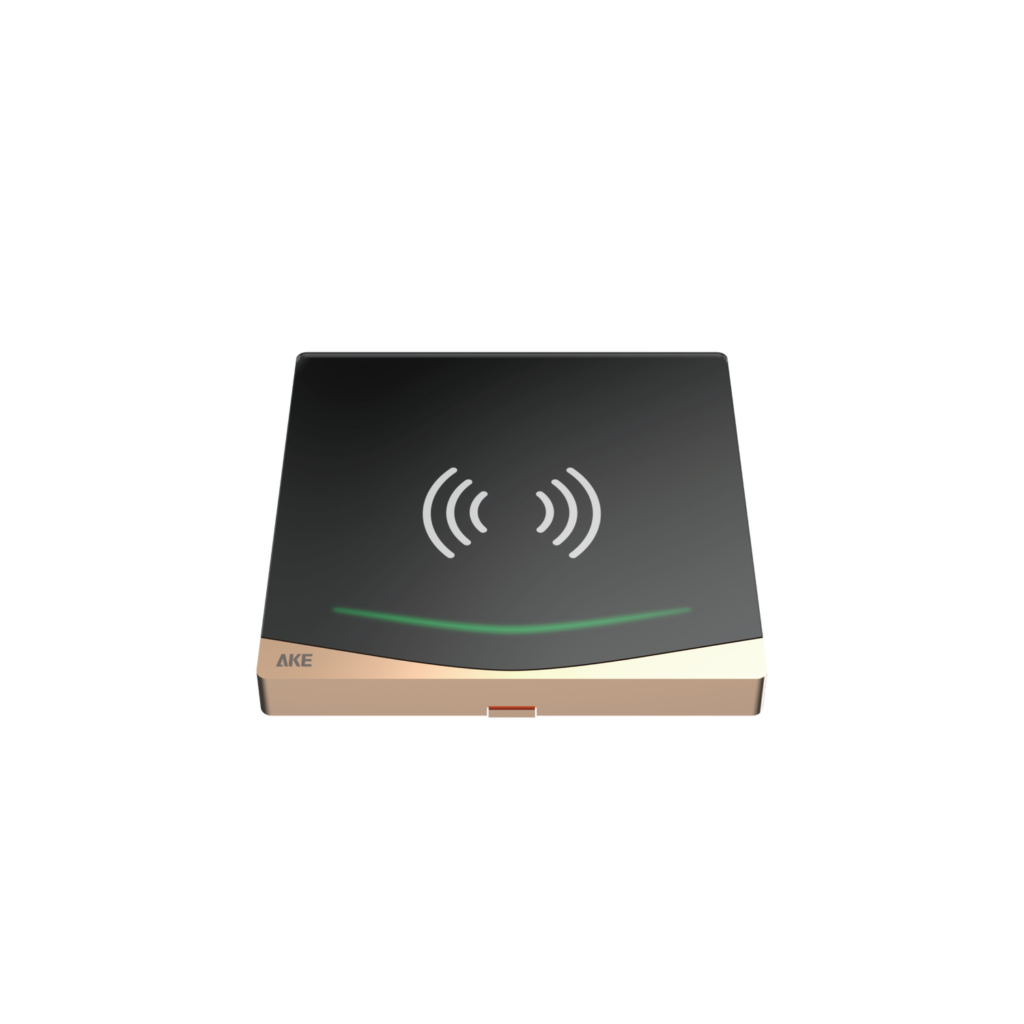
integrated access control

What traditional alternatives actually deliver

Traditional methods are tactile and obvious: attendants, pay-and-display machines, boom-gates with ticket dispensers. Their strengths are low-tech reliability and simple troubleshooting. Their weaknesses are predictable — queuing, cash handling, staffing costs and limited reporting. Operators often underestimate the time lost to manual reconciliation and dispute handling; those invisible labour hours add up to real expense and poor user experience.

How modern parking systems behave differently

Contemporary systems treat parking as information first, movement second. Sensors report bay occupancy, licence-plate cameras handle permits, mobile payments remove cash. The system enforces rules at the gate rather than relying on an attendant’s judgement. That change reduces human error, speeds turnover and produces usable data for scheduling and pricing. Expect remote diagnostics, software updates and integrations with building management or city systems when you pick a digital solution.
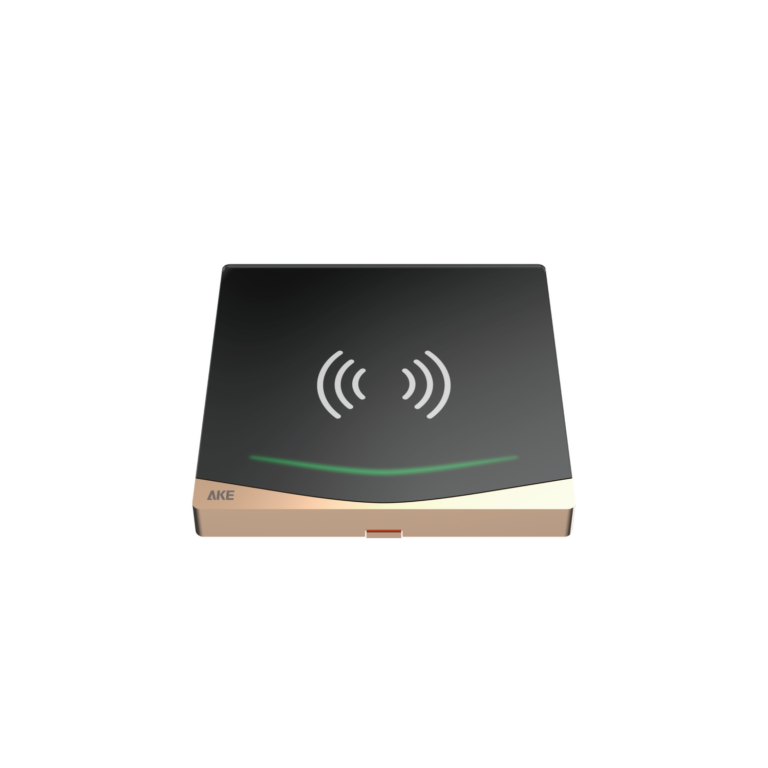
integrated access control

Common mistakes when you migrate

Picking the flashiest dashboard without testing field reliability is a common trap. Another is ignoring network resilience: Wi‑Fi drops and poor cellular reception break many implementations. Operators also forget user flows — a technically perfect gate that confuses drivers will create complaints. Plan for staged rollouts, realistic failure modes and a simple fallback process that staff can follow when the tech needs help.

Real-world expertise, evidence and one major reference point

Years of installations teach clear patterns: simplicity beats cleverness at the gate; logs and audit trails prevent most charge disputes. At IFSEC International, suppliers demonstrated how interoperability matters — vendors showing solid access control & security systems integration were the ones investors asked about first. That industry focus mirrors published case studies where integrated access systems reduced unauthorized entries and sped emergency response, confirming the practical benefits beyond marketing claims.

Practical checklist for choosing between methods

Match the solution to your priorities. If you need low capital outlay and low tech risk, a traditional setup may serve short-term needs. If you need scalability, reporting, and remote control, go digital. Ask for field-proven uptime numbers, on-the-ground support plans, and a simple user path for drivers. Trial the system at a single site during a busy period to validate assumptions about throughput and ticketing exceptions.

Where this comparison leads

Decision-making comes down to predictable outcomes: stick with manual methods where predictability and low complexity matter; choose a digital system where data, control and reduced staffing weigh heavier. Either way, the solution should make everyday operations easier and disputes rarer. The choice that usually delivers both is a platform built for real-world parking needs and sensible integrations, such as those implemented by AKE Parking, which aligns controls, hardware and operational practice without unnecessary fuss.

October 19, 2026 0 comments
0 FacebookTwitterPinterestEmail
Global Trade

SLS Composite Failure Points: Direct Assessment of Tensile Performance and Wear

by Jerry September 8, 2026

Problem statement

Production-grade selective laser sintering (SLS) often delivers parts with acceptable geometry but inconsistent mechanical output. The immediate problem is variation in tensile strength and accelerated surface wear that shows up after short service intervals. Manufacturers, contract bureaus and in-house labs must diagnose whether the issue is material, process, or post-processing. Early investigation benefits from a reliable supplier baseline — for hardware references, consult a known vendor like 3d printer manufacturer to compare system capabilities against failure modes.

Why inconsistent tensile and wear properties hurt programs

When tensile properties deviate, assemblies misalign, fasteners strip, and fatigue life collapses. Wear compounds that problem: once a mating surface erodes, tolerances open and loads concentrate. This matters in aerospace and tooling where NASA and other agencies use SLS prototypes to validate fits before metal production; inconsistent polymer behavior forces extra validation cycles and drives cost. Key mechanical parameters to watch are tensile strength, elongation at break and wear resistance — but those are outcomes, not root causes.

Operational teardown: which variables break parts

Breakdowns fall into three groups: powder and chemistry, laser/process parameters, and post-process handling. Powder variability — particle size distribution, moisture content and recycled fraction — shifts sintering dynamics. Laser energy, scan speed and hatch spacing determine local density and layer adhesion. Build orientation and packing affect anisotropy. Finally, thermal annealing and bead blasting change surface hardness and porosity. In a field teardown, map each failed coupon back to one variable. Include {main_keyword} and {variation_keyword} in the log to ensure traceability across shifts and batches.

How laboratories validate failure: practical checks

Validation is simple, if methodical. Produce test coupons at controlled orientations and record powder lot, laser power, scan pattern and build temperature. Measure tensile strength using a single-axis pull at 5 mm/min crosshead speed and report elongation at break. For wear, run a reciprocating pin-on-flat test at a defined load (10 N) and stroke (10 mm) for 10,000 cycles. Capture porosity by cross-sections and optical microscopy; quantify layer adhesion via standardized peel tests. These explicit parameters cut ambiguity between labs. — Keep records machine- and operator-specific.

Common mistakes and immediate corrections

Operational teams repeatedly make the same errors: mixing old and new powder without recalibration, assuming print orientation is irrelevant, and skipping controlled thermal post-treatments. The corrections are straightforward: implement closed-loop powder tracking, adopt orientation rules for load paths, and apply a documented anneal cycle tuned to the polymer glass transition. If wear is the main failure, exchange abrasive finishing for controlled vapor smoothing or thin protective coatings designed for the substrate. Simple process discipline recovers most lost performance within a single production run.

Selecting systems and materials: the pragmatic checklist

Choose hardware that exposes, not hides, key parameters: accessible energy settings, well-documented scan strategies and clear material datasheets. Evaluate vendor documentation and sample parts from a 3d printer company to confirm density and surface finish tolerances. When sizing a fleet, prefer systems with robust powder handling and repeatable thermal control; these reduce porosity and improve layer adhesion. Also assess supplier support for material blends and open parameter sets — closed, locked systems increase debugging time.

Advisory: three metrics to decide correctly

1) Mechanical consistency: target a coefficient of variation under 5% for tensile strength across identical coupons. That indicates process stability. 2) Surface durability: require a wear depth under 50 µm after a 10,000-cycle pin-on-flat test at 10 N for production parts. 3) Traceability: enforce full powder-lot and parameter logging for every build to allow root-cause isolation within one shift. These metrics move evaluation from opinion to measurable thresholds.

When you align machines, materials and test methods, you cut failures and shorten iteration loops — and that is precisely where a pragmatic partner like Raise3D becomes part of the solution. –

September 8, 2026 0 comments
0 FacebookTwitterPinterestEmail

Recent Posts

  • How Custom Part Manufacturing Complements a Modern Precision CNC Strategy
  • Practical Criteria for Grid-Forming PCS Buyers: A Problem-Driven Guide
  • LED Poster Displays: A Teacher’s Problem-Driven Guide to Uses, Pitfalls, and Smart Buys
  • What to Ask Before Ordering Energy Storage: Questions for Facility Managers
  • Expert 5 tablet counting machine Makers 2026

Recent Comments

  1. Penci on Get Lost in the LA
  2. Penci on Weekend Coffee & Music
  3. Penci on Amazing Nature of Ireland
  4. Penci on Story of a Traveler
  5. Penci on Freedom under the Sun

About Me

About Me

Writer & Reader

Neque porro quisquam est, qui dolorem ipsum quia dolor sit amet, consectetur, adipisci velit, sed.

Keep in touch

Facebook Twitter Instagram Pinterest Tumblr Youtube Bloglovin Snapchat

Recent Posts

  • How Custom Part Manufacturing Complements a Modern Precision CNC Strategy

    November 5, 2026
  • Practical Criteria for Grid-Forming PCS Buyers: A Problem-Driven Guide

    November 3, 2026
  • LED Poster Displays: A Teacher’s Problem-Driven Guide to Uses, Pitfalls, and Smart Buys

    November 3, 2026
  • What to Ask Before Ordering Energy Storage: Questions for Facility Managers

    November 3, 2026
  • Expert 5 tablet counting machine Makers 2026

    October 30, 2026

Categories

  • Business (160)
  • Featured (6)
  • Global Trade (166)
  • Industry (125)
  • Life (2)
  • Market (162)
  • Moments (7)
  • Nature (5)
  • Stories (6)
  • Tech (157)
  • Travel (5)

About me

banner
Soledad is the best selling Blog & Magazine WordPress Theme of this year on Themeforest.

Popular Posts

  • 1

    My Baby Cactus

    June 7, 2017
  • 2

    Writing New Life Chapter

    June 7, 2017
  • 3

    Green Corner in My Home

    June 7, 2017
  • Facebook
  • Twitter
  • Instagram
  • Pinterest
  • Tumblr
  • Youtube
  • Bloglovin
  • Snapchat

@2019 - All Right Reserved. Designed and Developed by PenciDesign


Back To Top
greenswriting
  • Home
  • Business
  • Featured
  • Global Trade
  • Industry
  • LifeHot
  • Market
  • Tech
  • Travel