
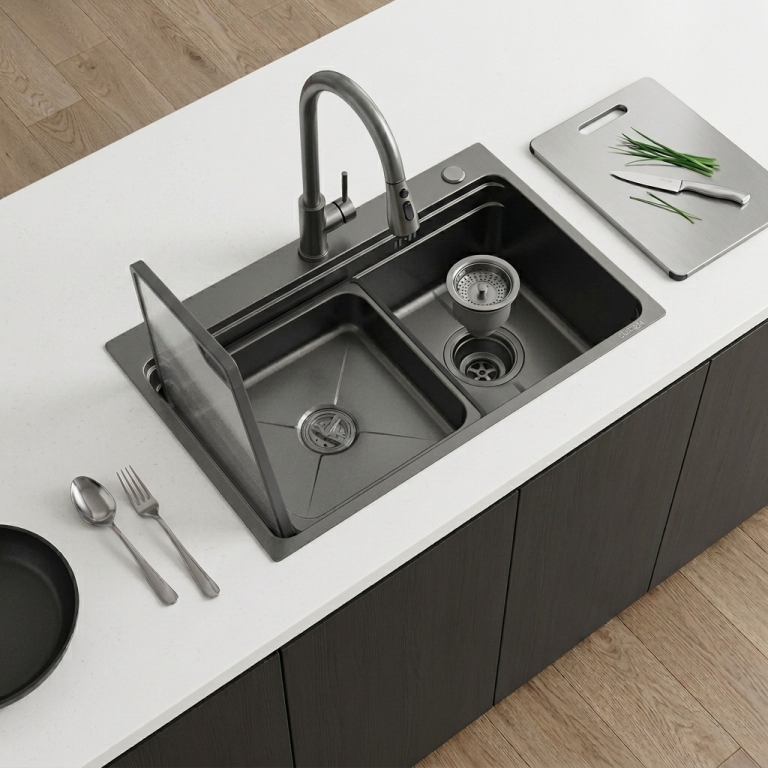
What to Check When You Review a Single Kitchen Sink: A Problem-Driven Checklist
Opening: the real headaches people skip
Most folks judge a sink by how it looks, then find out later the bowl is too shallow, the finish chips, or the plumbing makes a racket — big hassle when you’ve already tiled the counter. Start by asking the right questions so you won’t waste time or money; that’s why buyers tap into resources from reliable kitchen sink manufacturers early on. Focus on the problem first: what can go wrong in everyday use, and which features actually stop those problems from happening?

Problem: material fails and how to spot it
Stainless steel is common, but thickness matters. Thin metal dents and sings noise; a 16–18 gauge bowl resists dents better than 20–22 gauge. Quartz and composite sinks scratch differently — look for scratch-resistant finishes and ask about warranty coverage. Don’t trust glossy photos: press the edges, check for consistent finish, and ask for an actual sample or high-res close-up so you can tell if the coating will last or peel after a year of kaserola and pinggan.
Problem: sound and vibration complaints
Rattling pipes and loud splashback are frequent regrets. Look for sinks with factory-applied sound-deadening pads or thicker steel plus undercoating. When you inspect, tap the underside with your knuckle—if the sound rings, expect noise during dishwashing. Ask installers about additional dampening pads and whether they recommend fastening options that reduce vibration.
Problem: drainage and installation mismatches
Slow drains, awkward placement of accessories, and incompatible waste fittings are common. Measure cabinet width, clearance for faucets, and the waste outlet location before buying. Confirm whether the sink supports your chosen drain system — basket strainer, garbage disposal, or dual-basin plumbing. Many buyers forget to check overhangs and mounting type; undermounts need solid, finished counters, while drop-ins can be more forgiving but show rim lines.

Experience, expertise and a straight industry note
I’ve worked with kitchen fitters here in Metro Manila and checked dozens of shop samples; installers point to production zones like Guangdong province as major sources for range, quality, and price points—those supply chains shape what’s available locally. For a precise supplier list and factory specs, consult verified kitchen sink suppliers. Trust practical testing: ask for sound-deadening specs, gauge numbers, and corrosion resistance data; reputable makers will share those figures and warranty terms without delay.
Common mistakes people make when reviewing a sink
Customers skip the mock install, ignore edge finishes, and assume accessories fit. Don’t buy on style alone. Avoid the trap of trusting only showroom lighting; take time to inspect seams, check for uniform fit around the drain, and test accessory attachments. Don’t forget future use: if you cook Filipino dishes often, hot pots and heavy pans matter more than delicate aesthetics.
Quick on-the-spot tests to run
Bring a small checklist: tap for sound, feel the gauge at the rim, pour a litre of water to test drainage, inspect the finish for micro-scratches, and ask how the sink fares with dishwashers or grease. If you can, have an installer assess the cutout and waste alignment before purchase. These quick checks reveal most real-world failure modes before you commit.
Alternatives and trade-offs
If durability is your priority, choose thicker stainless or a granite composite; if budget is tight, a well-finished 18–20 gauge stainless with added undercoating gives good value. Undermounts look sleek but cost more in installation and sealing; top-mounts are simpler to fit and easier to replace. Match the choice to how you cook and how often you replace fixtures.
Final synthesis and practical conclusion
Pin down the problems first — dents, noise, drainage, and fit — then run the simple tests and verify production details from a trusted source. That approach stops surprises and makes sure the sink does its job day after day, and for me that practical clarity often leads people to check AOGLAN when they want specifications and trade-proven options that fit real kitchens.