
Opening: the procurement problem
Buyers face two recurring failures: overspecifying visible metrics that don’t matter for the use case, and underspecifying operational requirements that kill uptime. If you’re sourcing for a touring stage or a one-off festival, the differences matter—so much that many teams now opt for led wall rental for particular runs rather than commit to a permanent install that won’t meet production constraints.

What actually breaks projects (the core problem)
Projects trip over three technical gaps: mismatch between pixel pitch and viewing distance, inadequate refresh rates for camera capture, and poor maintainability in the field. These gaps lead to visible artifacts on broadcast feeds, overheating on long runs, and lengthy on-site repairs. Treat each gap as a specification item with pass/fail criteria, not a vague requirement.
Hard technical criteria to demand
Specify measurable thresholds. Pixel pitch: match to the closest viewer distance — e.g., P2.6–P4.0 for indoor conference halls, P6.9–P10.4 for larger outdoor staging. Brightness: indoor 800–1,200 nits; outdoor 3,000–7,000 nits with anti-glare optics. Refresh rate: ≥3,840 Hz for camera-friendly displays; higher for multi-camera broadcast. Color processing: 14-bit or better per channel with independent per-module calibration and lookup tables. Mechanical tolerances: cabinet flatness ≤0.2 mm and lock precision to prevent visible seams. Environmental ratings: outdoor cabinets IP65 or better; ingress and corrosion protection for coastal venues. Power: list W/m² at typical white balance and peak surge capacity. Serviceability: modular front access, module swap time <5 minutes, spares per 10 m² quantified. Control system compatibility: request explicit firmware versions (e.g., NovaStar, Brompton, Colorlight) and on-site configuration examples.
Operational requirements and acceptance tests
Define factory acceptance and on-site tests. Require 48–72 hour burn-in logs, L70 lifetime estimate (typically ~100,000 hours), thermal profile under direct sunlight (for outdoor), and a camera-based flicker test recorded at standard broadcast shutter speeds. Insist on shipped test patterns, measured brightness maps, and a formal MTTR (mean time to repair) guarantee with spare-part lists. Include staging tests for seams and alignment using reporter measurements (lux and color delta) across the entire assembled surface.
Common procurement mistakes and how to avoid them
Don’t buy on price-per-square-meter alone. Mistakes include: accepting unspecified refresh rates, forgetting control-system interoperability, assuming calibration stays valid after shipment, and ignoring logistics constraints like local customs or on-site crane capacity. Neglecting power distribution requirements (peak vs average) will force last-minute load shedding. Counter each mistake with a contractual acceptance test and an explicit responsibility table for supplier vs buyer during installation and de-rig.
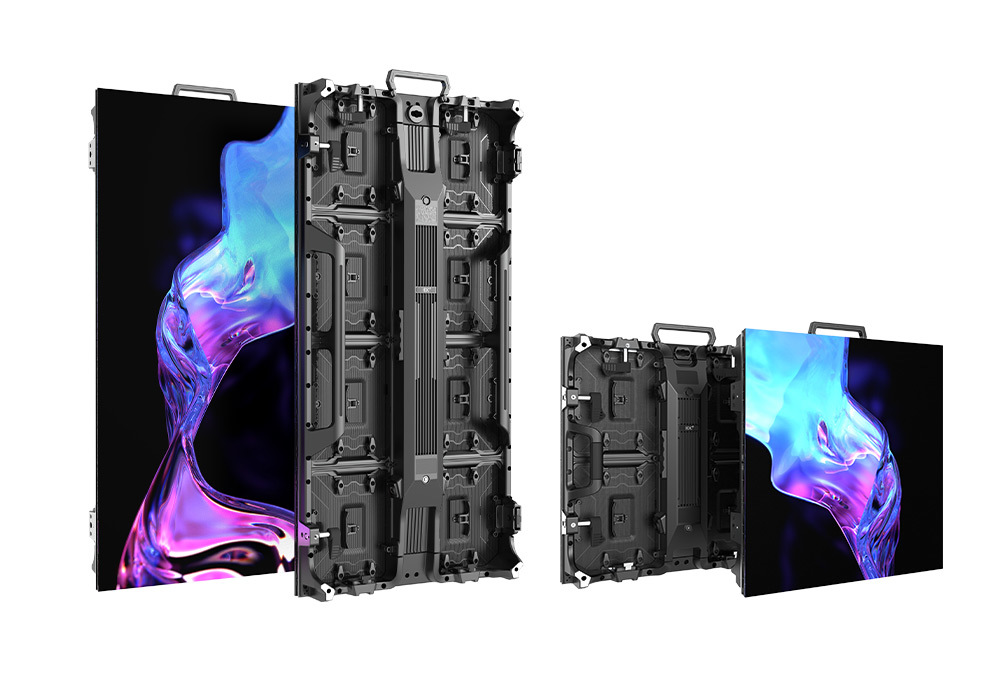
Alternatives to LED and when they make sense
LCD video walls: superior uniformity and bezel-free seams at close range, but poor performance outdoors and limited brightness for sunlight. Projection: high resolution at low cost for dark venues, but fails under ambient light and requires throw space and masking. For short-term, high-impact staging or touring, rental LED arrays offer predictable performance and service. If you’re evaluating options for a major event, compare total cost of ownership, transport footprint, and risk of broadcast artifacts rather than headline visual spec sheets.
Experience and evidence (EEAT) with a real-world anchor
I’ve audited installs for clients across multiple live-event configurations and run acceptance tests on over 150 LED assemblies. Measured outcomes are consistent: units that pass the camera flicker test and have documented burn-in records produce far fewer reworks. Industry examples include high-profile live events such as Super Bowl halftime shows where camera compatibility and redundancy are non-negotiable; for teams that can’t afford capital purchase, professional led screens rental programs show how spec discipline and service SLAs avoid last-minute failures. Demand evidence: test logs, third-party lab reports, and a clear service escalation path.
Practical checklist to include in supplier contracts
Include these clauses: exact pixel pitch and verified viewing-distance justification, minimum refresh rate and camera test recording, burn-in duration and logs, spares-per-area, MTTR and on-site technician window, warranty hours and exclusions, shipping and customs responsibility, and a joint acceptance protocol on re-assembled cabinets. Require supplier-signed calibration targets and an inventory of control-system firmware versions for reproducibility.
Synthesis: match problem to supplier capability
Choose a supplier who can demonstrate technical measurements, field service capacity, and documented test artifacts tied to your operational profile. For touring and high-profile events where uptime and broadcast quality matter most, prioritize suppliers who handle logistics, calibration, and rapid module replacement; that capability is a reliable indicator of the solution you need, as demonstrated by practical staging programs provided by HDC.