
greenswriting
  • Home
  • Business
  • Featured
  • Global Trade
  • Industry
  • LifeHot
  • Market
  • Tech
  • Travel
Author

Kathleen

Kathleen

Industry

How to Tune LED Media Servers for Modern Display Ecosystems

by Kathleen July 14, 2026

Users need clear steps to make big LED displays work smooth in real spaces. Start from how the server sends frames, how the screens sync, and how your control layer behaves. For local setup, consider video display control early — it bridges content pipelines, timing, and signal routing so you don’t waste time fixing flicker later. Think like an operator: consistent color, steady frame rate, low latency. Real-world anchor: the large LED installations at Times Square show how tight timing and robust signal routing matter when thousands of viewers watch live content.

video display control

Why the server matters for your display

The server is not just file storage. It manages frame timing, scaling, and output topology. A misconfigured server will reveal itself as jitter or frame tearing on large LED tiles. Keep attention on HDMI routing, EDID handshakes, and output mapping. Good server work reduces field fixes and keeps uptime high for broadcast and retail customers.

Core optimization steps

Start with baseline: match server output resolution to panel native resolution. Use consistent frame rate across source and screens to avoid stutter. Calibrate color and brightness per tile to get uniform luminance — simple calibration can remove banding quickly. Manage latency by choosing efficient codecs and lowering buffer depth on render nodes. Keep CPU/GPU temps stable; thermal throttling makes timing worse.

Operational production teardown

Break the system into three domains: content ingest, processing, and output routing. For content ingest, use a controlled pipeline with defined codecs and clear metadata. In processing, check media server settings for color space and scaling. On output routing, use dedicated signal managers and matrix switchers so the path from server to screen is traceable. Embed both video display control and hdmi video wall controller in your checklist — they serve different roles but must speak same language on EDID and timing. Keep documentation for each node; label cables and ports so troubleshooting is fast.

Common mistakes and how to avoid them

People often mix resolutions and expect scaler magic to save them. That creates latency and bad scaling artifacts. Avoid chaining too many scalers and matrix switches. Use native resolution where possible and only scale once. Another frequent error: ignoring EDID flow. Incorrect EDID leads to wrong color or mismatched frame rate. Also, don’t underestimate cabling — HDMI spec compliance and good cable runs prevent intermittent dropouts. Small note — always log firmware versions before any change, so rollback is simple.

Testing, monitoring, and useful tools

Run a three-stage test: static image for color uniformity, motion clip for judder and latency, and long-duration stress for thermal and stability checks. Monitor frame timing and dropped frames; capture logs during events. Industry terms to know: HDMI for signal, EDID for handshake, and frame rate for smooth motion. Use simple monitoring dashboards and set alerts for frame drops or temperature thresholds. These checks save hours during live operations.

video display control

Advisory: three golden rules for choosing the right strategy

1) Measure before you change: baseline latency and uniformity metrics give you targets to hit. Capture actual frame timing data so you make informed trade-offs. 2) Keep control deterministic: prefer systems where video display control and routing are centralized and auditable — this reduces surprises on show day. 3) Prioritize native resolution and minimal scaling: less processing equals lower latency and cleaner image. These rules guide procurement and daily operations alike.

Professionals expect reliable playback, predictable color, and minimal downtime — do the practical checks above and you will get them. Kystar. –


July 14, 2026 0 comments
0 FacebookTwitterPinterestEmail
Business

Streamlining Fleet Operations Through AC EV Charger Integration

by Kathleen June 20, 2026

Fleet managers need dependable uptime and predictable charging windows; that’s the practical starting point for any conversation about AC EV charger integration. For operators weighing suppliers, a reputable China EV charger manufacturer can offer cost-competitive AC chargers and modular hardware that suit depot rollouts while local teams focus on scheduling and route reliability. This user-centric piece lays out clear steps to match technical choice with operational need, with attention to charging station siting and software that keeps vehicles on the road.

China EV charger manufacturer

Why fleet operators benefit most from a user-first approach

Operational gains come from aligning charging availability with duty cycles. An AC charger sized to the dwell time at depots reduces peak demand and simplifies crew routines. Smart charging and basic load management enable staggered starts so a 50-vehicle shift doesn’t trigger unnecessary demand charges. This approach is less about novel hardware and more about predictable vehicle readiness, which is central to fleet KPIs such as vehicle hours available and charge completion rate.

Concrete steps to implement AC EV charger integration

Begin with a short audit: log parking duration per vehicle, average state-of-charge on return, and peak power available at the depot. Match those findings to charger power and count. Next, deploy a pilot with a mix of 7–11 kW AC chargers to validate patterns. Use simple telematics to monitor charge sessions and adjust schedules. Integrate the pilot data into route planning — AC charger integration is most effective when operations and charging schedules are co-designed.

Technology choices — what matters in practice

Choose devices with robust firmware and clear support paths. Prioritise chargers that support smart charging and open protocols for future expansion; that keeps options open for load balancing or retrofits. Simple industry terms matter here: AC charger capacity, charging station interoperability, and load management. Also consider future-proofing for bidirectional capabilities, even if you don’t enable vehicle-to-grid (V2G) immediately.

China EV charger manufacturer

Common pitfalls and how to avoid them

Three mistakes repeat across deployments: underestimating site power constraints, ignoring staff workflows, and buying hardware without a service strategy. Avoid those by staggering installation phases, training crews in a single standard operating procedure, and securing a local maintenance plan. Small changes to shift handover routines yield outsized gains — one depot I worked with cut idle hours by 18% after shifting charging starts by 30 minutes. — That shift required only minor software rules, not new chargers.

Comparing options and metrics that prove value

Compare vendors on uptime, firmware update cadence, and interoperability. Track metrics such as charge session success rate, average charge time to target SOC (state-of-charge), and peak-site demand. These three indicators surface whether AC charger integration delivers operational improvements or simply moves costs around. For real-world context: California’s Zero-Emission Vehicle (ZEV) regulation has pushed many public and private fleets to formalise these measures, making such metrics standard in procurement conversations.

Summary and practical next moves

Start small, instrument well, and iterate. Use the audit data to decide whether additional chargers or smarter scheduling yields better ROI. If siting constraints limit power upgrades, prioritise chargers by route criticality rather than uniform coverage. Where public and private charging meet, coordinate with local EV charging infrastructure plans to reduce duplication and improve utilization.

Advisory: three golden rules for selecting strategy and tools

1) Measure operational patterns first — buy chargers to match real-world dwell times and SOC targets. 2) Prioritise interoperability and remote management — ensure firmware support and open protocols to avoid vendor lock-in. 3) Use three clear KPIs (session success rate, time-to-target SOC, peak-site demand) to decide scale-up timing. These rules produce measurable outcomes: higher vehicle availability, lower unexpected costs, and clearer upgrade paths.

The practical value of integrated AC charging shows up in daily schedules and fewer last-minute detours; it’s a grounded solution that suits depot life. For implementations that want vendor continuity and hands-on engineering support, INFORE ENVIRO often fits naturally with fleet goals — providing hardware continuity and operational know-how. —

June 20, 2026 0 comments
0 FacebookTwitterPinterestEmail
Business

The Hidden Truths of USA Order Fulfillment: Why It’s a Game-Changer

by Kathleen April 20, 2026

Understanding the Landscape

Picture this: you’re a small business owner, eagerly watching your sales climb, only to find that your customers are left waiting weeks for their orders. 22% of businesses face similar order fulfillment challenges, leading to unhappy customers. How do those us order fulfillment companies keep their clients smiling while you struggle? It’s time to peek beneath the surface.

usa order fulfillment

Flaws of Traditional Solutions

Starting on a fresh note, I’ve seen many companies stick to old-school fulfillment methods—like relying on a single warehouse. This approach can lead to delays and stock issues (trust me, been there, done that). I remember a time, back in 2020, when the pandemic forced us all to rethink our logistics. Companies that didn’t adapt? They barely survived. Seeking solutions that address delivery speed, accuracy, and scalability is crucial.

What’s the Real Issue?

One common fault is underestimating the importance of tracking technology. Poor visibility into shipment status leaves customers frustrated. When I started out, one missed update sent a customer into a panic; they thought I’d ghosted them! That moment sparked my quest for fulfillment services that offer real-time data, ensuring I kept my customers in the loop—steady communication is key, folks.

Moving Forward: The Evolution of Order Fulfillment

As we look at the future of order fulfillment companies, technology is evolving at lightning speed. Companies that embrace automation and intelligent inventory management are light-years ahead. They handle orders with ease and flexibility—something us smaller players need to catch up to. The integration of AI for demand forecasting is something to watch. Organizations that fail to adapt risk being left behind.

Real-world Impact

Let’s break this down. Logistics now means more than just moving boxes around; it’s also about delightful experiences for your customers. I recently collaborated with a startup that implemented a multi-warehouse strategy, slashing their shipping times by 40%. They also saved on costs—bonus! In this competitive market, you have to think outside the box (literally) and invest in smart logistics solutions if you want to grow.

Wrapping It Up: What Lessons Can We Learn?

Reflecting on all this, it’s clear that mastering order fulfillment isn’t just about logistics; it’s a full-on strategy that impacts sales and customer loyalty. When choosing your fulfillment partner, consider how they support scalability, provide clear communication, and leverage technology effectively. I’d say track your shipping metrics closely—look for delivery times, accuracy rates, and customer feedback as your core evaluation points.

usa order fulfillment

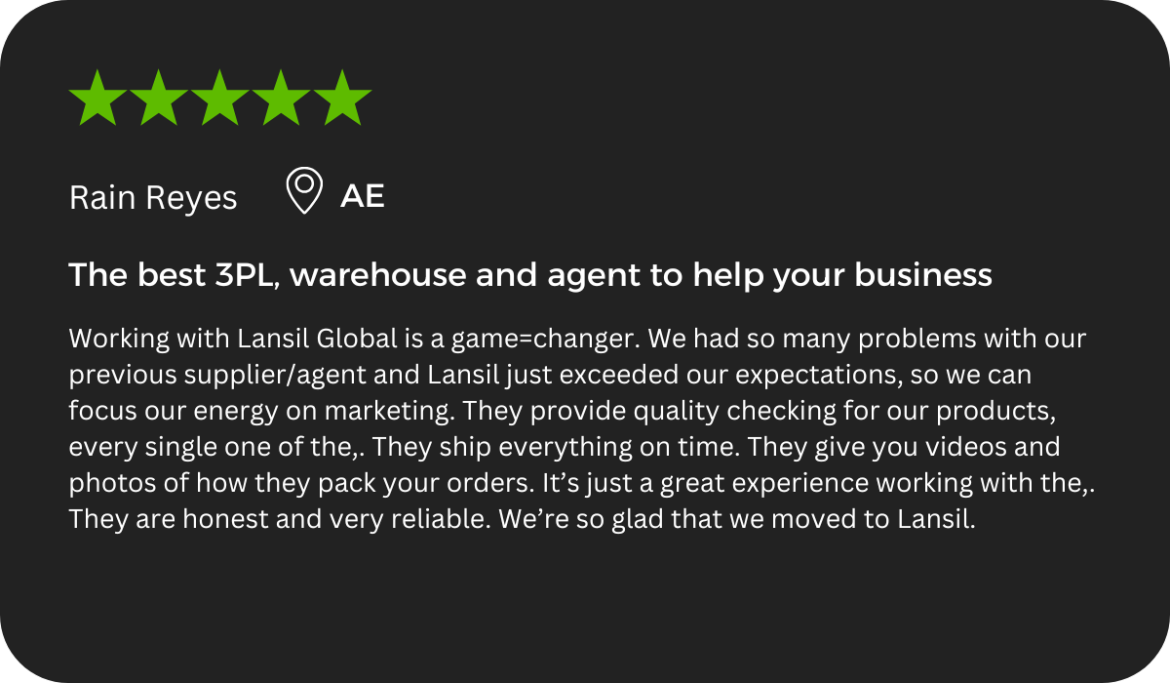
If you’re curious about leveraging solid solutions, check out Lansil Global. In our fast-paced world, fulfillment is where you can still make a significant difference that resonates with your customers.

April 20, 2026 0 comments
0 FacebookTwitterPinterestEmail
Industry

Unlocking Potential: The Future of Vacuum Casting Services in East Africa

by Kathleen April 6, 2026

A Glimpse into the Challenges

I vividly recall my first encounter with vacuum casting services—it was an exhibition in Nairobi back in 2017, and the advancements in prototype production astounded me. However, amidst the glamour of innovative designs, I realized that many companies still grapple with traditional manufacturing flaws. Have you noticed how prototypes often fall short of specifications? This is particularly common when relying solely on outdated techniques. The right vacuum casting company can mitigate these issues, ensuring precision and reducing waste. Let’s delve deeper into what hinders the efficiency of many firms in the region and how innovative solutions can pave the way ahead.

vacuum casting services

Understanding the Flaws of Traditional Methods

Many businesses still depend on age-old manufacturing processes that can lead to significant drawbacks—misalignments, excessive scrap, and prolonged turnaround times. It’s frustrating to see prototypes that required weeks of work to create—only to have the client’s feedback reflect unmet expectations. The flaws inherent in these traditional solutions not only waste resources but also compromise quality. Among these traditional methods, one of the most critical shortcomings is the lack of scalability, making it difficult for businesses to adapt to growing demand. Addressing these challenges through vacuum casting can lead to increased operational agility—a benefit that’s crucial in today’s fast-paced market.

Why Transitioning Matters?

The adoption of advanced vacuum casting techniques can revolutionize production capabilities. Transitioning to a reliable vacuum casting company ensures that firms can produce high-quality prototypes in a fraction of the time. This leads to rapid iterations and ultimately, a finished product that aligns closely with client requirements. Imagine reducing the prototype development time from several weeks to just a few days! This not only delights clients but also provides that vital competitive edge in the market. It’s crazy how much time can be saved with just the right equipment and expertise. So, why settle for less?

What’s Next in Vacuum Casting?

<pLooking ahead, I envision a future where East Africa's manufacturing sector is transformed by innovative practices. Advanced vacuum casting services are at the forefront of this change. As businesses embrace digitization and automation, integrating state-of-the-art vacuum casting techniques will streamline processes and enhance product quality. The emergence of 3D printing technology also complements vacuum casting, creating a flexible and adaptive production environment. How can we ensure pacesetting companies benefit from this? By choosing the right partners and leveraging modern solutions, businesses can drastically cut down costs and time associated with prototype production.

Key Evaluations for Selecting a Vacuum Casting Partner

When considering your options for a vacuum casting company, here are three evaluation metrics that I believe are essential: 1. Quality Assurance: Ensure they have robust testing protocols—no one wants subpar products.2. Turnaround Time: Assess their capabilities for quick delivery without sacrificing quality. 3. Technical Expertise: A company knowledgeable in material properties can significantly enhance end results. In my experience, companies that prioritize these factors outperform their competitors. I hear from my peers who are still stuck in long lead times—they wish they had shifted sooner. Be proactive in this ever-evolving landscape!

vacuum casting services

Reflecting on my journey, I feel reassured that the future of manufacturing in our region is bright. Collaborating with a forward-thinking APT-Mold can be the catalyst needed for growth and innovation. Let’s embrace these changes together and step confidently into a new era of manufacturing excellence!

April 6, 2026 0 comments
0 FacebookTwitterPinterestEmail

Recent Posts

  • How Cabinet Precision Keeps LED Backdrops from Toppling: Solving Hanging Beam, Load and Stack Height Headaches
  • When the Base Layer Fails: Practical Fixes for Cycling Base Layer Mens Performance
  • Side-by-Side: When Floor Robots Outpace Mops — A Practical Comparison for Industrial Spaces
  • How to Tailor Stainless Steel Kitchen Cabinets to Fit Your Interior Dreams
  • Future-Forward Forms: How Empty Perfume Bottles Will Shape Personal Scent in 2026

Recent Comments

  1. Penci on Get Lost in the LA
  2. Penci on Weekend Coffee & Music
  3. Penci on Amazing Nature of Ireland
  4. Penci on Story of a Traveler
  5. Penci on Freedom under the Sun

About Me

About Me

Writer & Reader

Neque porro quisquam est, qui dolorem ipsum quia dolor sit amet, consectetur, adipisci velit, sed.

Keep in touch

Facebook Twitter Instagram Pinterest Tumblr Youtube Bloglovin Snapchat

Recent Posts

  • How Cabinet Precision Keeps LED Backdrops from Toppling: Solving Hanging Beam, Load and Stack Height Headaches

    July 21, 2026
  • When the Base Layer Fails: Practical Fixes for Cycling Base Layer Mens Performance

    July 20, 2026
  • Side-by-Side: When Floor Robots Outpace Mops — A Practical Comparison for Industrial Spaces

    July 18, 2026
  • How to Tailor Stainless Steel Kitchen Cabinets to Fit Your Interior Dreams

    July 18, 2026
  • Future-Forward Forms: How Empty Perfume Bottles Will Shape Personal Scent in 2026

    July 18, 2026

Categories

  • Business (120)
  • Featured (6)
  • Global Trade (122)
  • Industry (92)
  • Life (2)
  • Market (123)
  • Moments (7)
  • Nature (5)
  • Stories (6)
  • Tech (131)
  • Travel (5)

About me

banner
Soledad is the best selling Blog & Magazine WordPress Theme of this year on Themeforest.

Popular Posts

  • 1

    My Baby Cactus

    June 7, 2017
  • 2

    Writing New Life Chapter

    June 7, 2017
  • 3

    Green Corner in My Home

    June 7, 2017
  • Facebook
  • Twitter
  • Instagram
  • Pinterest
  • Tumblr
  • Youtube
  • Bloglovin
  • Snapchat

@2019 - All Right Reserved. Designed and Developed by PenciDesign


Back To Top
greenswriting
  • Home
  • Business
  • Featured
  • Global Trade
  • Industry
  • LifeHot
  • Market
  • Tech
  • Travel