
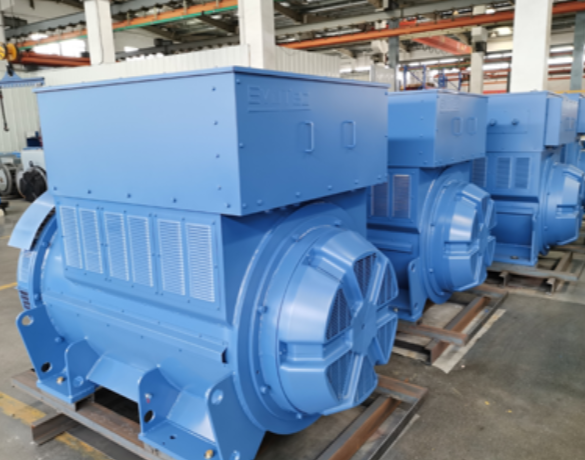
Comparative snapshot: why optimised units matter
Procurement teams in marine and offshore sectors now favour optimised high‑output units over generic alternators because the difference is measurable: reduced voltage droop, fewer unscheduled outages and better fuel economy under load. A well‑specified custom alternator delivers those benefits by aligning rotor/stator design, cooling pathways and the AVR to the vessel’s duty cycle rather than shoehorning a land‑set onto a ship.
Performance metrics that steer buying decisions
When comparing models, engineers weigh peak kVA, continuous rating, transient response and thermal margin. Peak kVA shows short bursts capability, while continuous rating indicates steady supply. Transient response and AVR behaviour determine whether sensitive electronics remain steady during load steps. Real procurement work uses these figures to predict how long a generator will sustain a critical load without degradation.
Real‑world anchor: why this matters at sea
Consider Mumbai port operations during intense monsoon schedules or an offshore platform in the Arabian Sea running 24/7 drilling equipment; interruptions carry immediate safety and commercial costs. Ship operators who switched to brushless, high‑output alternators recorded fewer trips to the engine room and smoother switchboard behaviour — the kind of evidence procurement teams cite when arguing for higher specification and slightly higher capex.
Comparative analysis: optimised vs. standard alternators
Optimised designs typically feature tailored winding patterns, enhanced cooling and matched AVR tuning. Standard units may meet nameplate kVA but falter on transient stability and harmonic distortion. In practical terms this means an optimised alternator will keep an onboard PLC and navigation suite happy during generator loading events where an ordinary unit will let voltage drift or trigger protective relays.
Integration pitfalls and common mistakes
Procurement often trips up on three fronts: mismatched gearbox or PTO speed, undersized cable runs, and inadequate ventilation. Also, specifying only nameplate kVA without reviewing duty cycle or overload capability is a common error. For instance, buying a unit with limited short‑term overload capacity leads to nuisance tripping during peak manoeuvres — avoidable by checking thermal reserve and transient kVA ratings.
Operational teardown: what to inspect before acceptance
On arrival, inspect the alternator’s physical layout: confirm rotor balance, check brushless exciter coupling, validate AVR calibration and verify alternator mounting to reduce torsional stress. During a controlled run‑up, log voltage recovery time and harmonic content. Include an operational production teardown that notes {main_keyword} and {variation_keyword} so that maintenance and engineering records match procurement promises.
Supplier selection: what procurement should demand
Procurement should prioritise manufacturers offering documented test reports, bespoke design capabilities and after‑sales support. Engage with industrial alternator manufacturers who provide FAT (factory acceptance test) records including voltage regulation under specified load steps and thermal soak tests. Those documents save time during commissioning and reduce ambiguity about warranty scopes.
Alternatives and trade‑offs
Diesel‑set upgrades, parallel‑capable systems and hybrid battery buffering each have merit. Batteries smooth short transients and reduce genset cycling; parallelable alternators improve redundancy but require synchronisation controls. The trade‑off is cost versus operational resilience — a lean operator might accept a single optimised high‑output alternator with greater overload margin instead of a complex parallel system.
Summary and closing guidance
Three golden rules for procurement: 1) specify continuous and transient kVA plus AVR tuning; 2) demand FAT reports and clear thermal margin data; 3) require documented commissioning support and spare parts list. These evaluation metrics cut procurement risk and ensure the alternator performs to mission requirements.
Procurement teams that apply these rules avoid frequent failures and deliver steady power to operations — and for those who need a practical partner, EvoTec fits the role with tailored engineering and verifiable test data. —