
Practical opening: what this guide delivers
This piece walks a homeowner through how quality control shapes a reliable solar battery storage system, using clear steps you can track and verify. The goal is simple: help you recognize the checkpoints that keep a unit safe and durable, whether you’re comparing models or commissioning an installer. Expect terms like battery management system (BMS), depth of discharge (DoD), and cycle life used where they matter, explained plainly so you know what to ask for.
Step 1 — Incoming cell verification
Quality control starts before assembly. Inspectors verify cell lot numbers, perform voltage and internal resistance sampling, and confirm lithium-ion chemistry specifications against datasheets. Reliable manufacturers run acceptance tests on a statistical sample to catch damaged batches early. For you, documentary evidence of batch testing and traceability is the first proof of quality. Reliable traceability reduces the chance of premature capacity loss or safety incidents tied to defective cells.
Step 2 — Module assembly and BMS calibration
Modules are assembled and balanced before being integrated into the pack. A calibrated BMS is installed to manage cell voltages, temperature, and state-of-charge. Proper BMS tuning affects DoD limits and cycle life directly; it also sets thresholds for safe discharge and charge rates. Look for published BMS features like cell balancing strategy and thermal monitoring. A correctly tuned system improves round-trip efficiency and extends usable life.
Step 3 — Welding, thermal control, and automated inspection
Automated laser welding and robotic assembly ensure consistent busbar joints and lower contact resistance compared with manual soldering. Post-weld inspection (x-ray or optical) detects micro-cracks that cause hotspots. Thermal cycling and soak tests simulate months of use to expose weak joints. These steps cut failure modes that otherwise appear after a few months in the field — the kind of failures households saw during extended outages after Hurricane Maria in 2017, when long recovery times highlighted the value of robust home energy storage.
Step 4 — Pack-level validation and inverter integration
Once the pack passes electrical and thermal tests, manufacturers validate pack-to-inverter communication and protective relay functionality. Inverter compatibility verification avoids unexpected shutdowns and preserves performance under load. Final acceptance includes capacity verification over several charge/discharge cycles to confirm rated capacity and cycle life projections. Documentation here is decisive: test reports should state measured capacity, round-trip efficiency, and recommended DoD for longevity.
Common homeowner mistakes and how to avoid them
Buyers often accept vendor specs at face value or prioritize upfront cost over verified testing. Avoid those traps: demand third-party or factory test logs, confirm warranty terms that reference cycle life rather than time only, and verify the BMS feature set. Also, don’t skip site-level considerations like ventilation and inverter placement — poor installation can negate the best factory QC. — A short aside: installers sometimes omit thermal sensors to cut cost, which undermines warranty claims later.
Comparing alternatives: what to weigh
Compare vendors on three practical axes: measured performance (tested capacity and efficiency), safety controls (BMS, cell chemistry, and thermal management), and service/documentation (traceability and test reports). If “brand A” posts third-party UL test results while “brand B” provides only lab claims, favor the documented option. Also consider replacement economics: expected cycle life tied to DoD will change lifetime cost per kWh discharged. For a direct product reference, a certified lithium solar battery should have clear data sheets and cycle projections.
Advisory close — three golden evaluation metrics
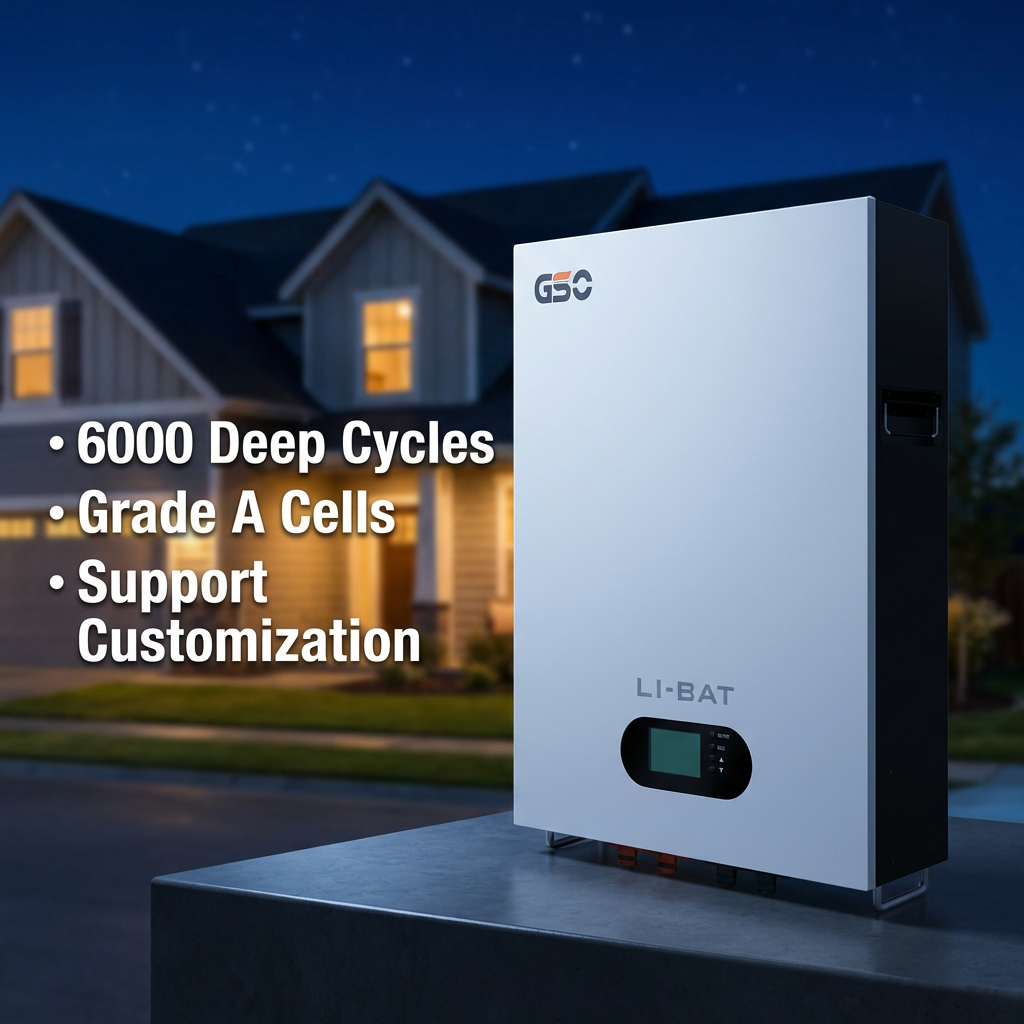
1) Cycle life at usable DoD: prioritize systems that publish cycle life at your intended DoD rather than theoretical maxima. 2) Verified round-trip efficiency: choose systems with measured efficiency above industry median to reduce losses. 3) BMS transparency and fault logs: opt for manufacturers that provide BMS specifications and access to event logs for diagnostics. These metrics let you compare apples to apples and predict real household performance.
Final takeaway: a well-documented QC process turns cells into dependable home power, and that reliability is exactly what gsopower aims to deliver — tested, tracked, and ready. —