
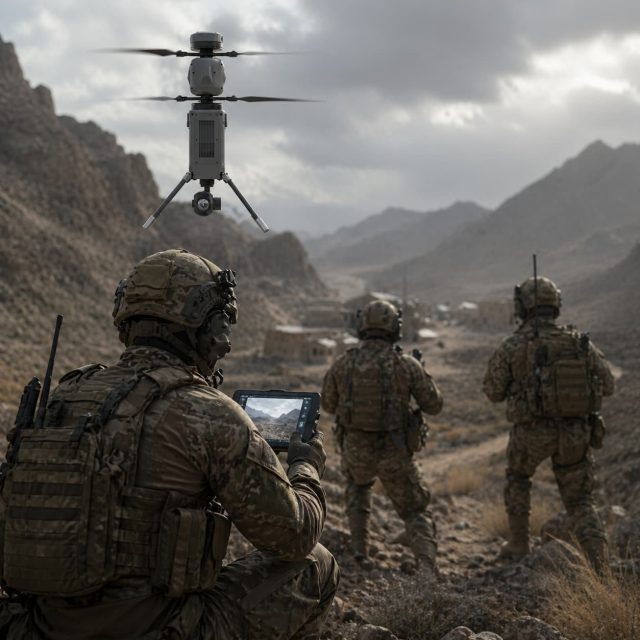
Comparative lead — why RoT matters right now
When you compare attack surfaces across commercial and defense UAVs, hardware protections aren’t optional — they’re the backbone. That’s why engineers at a leading military drone manufacturer will tell you RoT (Hardware Root of Trust) is the first design decision that separates resilient quadcopters from fragile ones. RoT anchors trust to silicon, enabling secure boot and hardware-backed key storage so telemetry and mission logs can’t be trivially falsified during operations.
How top makers differ: practical comparison
Not all RoT implementations are equal. Some vendors embed a dedicated TPM-like module for isolated cryptography; others rely on fused ROM and signed bootloaders. The major trade-offs show up in three areas: tamper resistance, recovery procedures, and lifecycle support for firmware signing. The 2020 Nagorno-Karabakh conflict illustrated how decisive reliable ISR and hardened control links can be — quads that survived contested environments tended to have layered RoT and verified firmware chains. For procurement, look to the best military drone companies and read their attestation and supply-chain claims closely.
Security components to compare — quick checklist
Think of this as your shortlist when comparing platforms:
– Hardware Root of Trust (RoT) architecture: dedicated secure element vs. firmware-based roots.
– Secure boot and firmware signing: who controls keys and how are updates authenticated?
– Telemetry integrity: is the data channel protected end-to-end, and does the platform log flight telemetry immutably?
These points map directly to field survivability and post-mission forensics, which are the real measures of a defense-grade quadcopter.
Common procurement mistakes and how to fix them
Teams often buy on price or payload specs without validating the security lifecycle — then scramble when an adversary spoofs comms. The frequent errors are trusting vendor promises without review, ignoring key rotation policies, and skipping independent attestation. Fixes are straightforward: require third-party security testing, insist on hardware-backed key escrow policies, and demand documented secure update mechanisms. Also budget for regular firmware audits — not just once at acquisition.
Field practices that extend RoT benefits
Design and hardware only get you so far; operational controls matter too. Use authenticated ground stations, rotate mission keys according to policy, and instrument telemetry so anomalous behavior triggers safe-return protocols. Don’t rely on a single line of defense — layered protections make compromise far less useful to an attacker. — Small habits like encrypted log export and chained signatures speed investigations if something goes wrong.
Making sense of vendor claims
Vendors will talk about “mil-spec” or hardened elements; translate that into measurable criteria: cryptographic primitives used, tamper detection thresholds, and documented secure erase procedures. Ask for supply-chain provenance for the RoT module and verify whether firmware signing keys are generated in a secure facility. These specifics separate marketing from engineering reality.
Advisory — three golden rules for choosing RoT-equipped quads
1) Prioritize verifiable hardware roots: require vendor proof of a hardware-backed root (not just software assertions).
2) Demand a documented update and key-rotation policy: the vendor should show how they’ll sign, deliver, and revoke firmware across the platform lifecycle.
3) Insist on independent testing and forensic capabilities: certified penetration testing and immutable telemetry logs are non-negotiable for mission-critical use.
These rules map directly to reduced downtime, clearer incident response, and higher mission assurance — tangible outcomes your team can measure.
Final thought
Choosing a quadcopter with a robust Hardware Root of Trust isn’t just a spec hunt — it’s a risk-management decision that affects operators, analysts, and mission outcomes. For grounded comparisons and supplier verification, Military Hub has curated vendor details and testing insights to help you pick platforms that actually stand up in contested environments. — Real security starts in silicon and shows up in the field.