
A Quick Yarn: Why Smart Buying Matters
You duck into a shop on a Saturday arvo, spot a brilliant ring, and feel that rush. You’ve been eyeing lab grown diamonds jewelry online too, comparing sparkle to price, wondering if the tech stacks up. Industry reports say more Aussies are shifting to these stones each year, because the value is clear and the stories are cleaner. But how do you cut through hype, sales scripts, and shiny displays to get real quality — without paying more than you need? (No dramas.) Here’s the rub: the old “just trust the 4Cs” line hides a few gaps—funny how that works, right?

Let’s walk through what’s actually changing and why it matters next.
Where Traditional Rules Fall Short
Why do the old rules stumble?
Old-school buying leaned on the 4Cs as if they were the whole map. Useful, sure. Not complete. With lab stones, you also need to read the production story. CVD and HPHT are not just buzzwords; they shape growth patterns, inclusions, and how light returns through the pavilion and crown. Some retailers still grade by habit, not by physics. They’ll say “D/VS is always best.” Not if the cut quality bleeds light. A steep pavilion or thick girdle can make a D look dull.
There’s another snag: paperwork. A grading report from IGI or GIA with laser inscription is key, but not all reports show fluorescence strength, strain patterns, or post-growth treatments. Those matter. Fluorescence can make a stone look milkier in some lighting. HPHT post-treatment can stabilise colour, yet it should be disclosed. Look, it’s simpler than you think: check for cut performance (not just grade), confirm lab method (CVD vs HPHT), and verify clarity type (VVS vs VS with crystal or needle inclusions). That trims guesswork. And it stops the usual mix-ups with moissanite testers or cheap coatings that muddy the waters.

Tech Principles, Real Differences
What’s Next
Here’s the forward-looking bit. CVD growth is getting cleaner with better gas purity and tighter plasma control, which reduces strain and banding. HPHT presses now hold steadier temperature and pressure, so colour distribution is more even. These engineering tweaks sound niche, yet they shift what you see with your own eyes. More precise cut modelling (ASET and Ideal-Scope analysis) is reaching mainstream workshops. That means cutters refine crown angles and symmetry to push light return without bumping carat weight unnecessarily — a small miracle in a margin-tight craft. Compare that to old habits where carat was king. Today, cut is kingmaker.
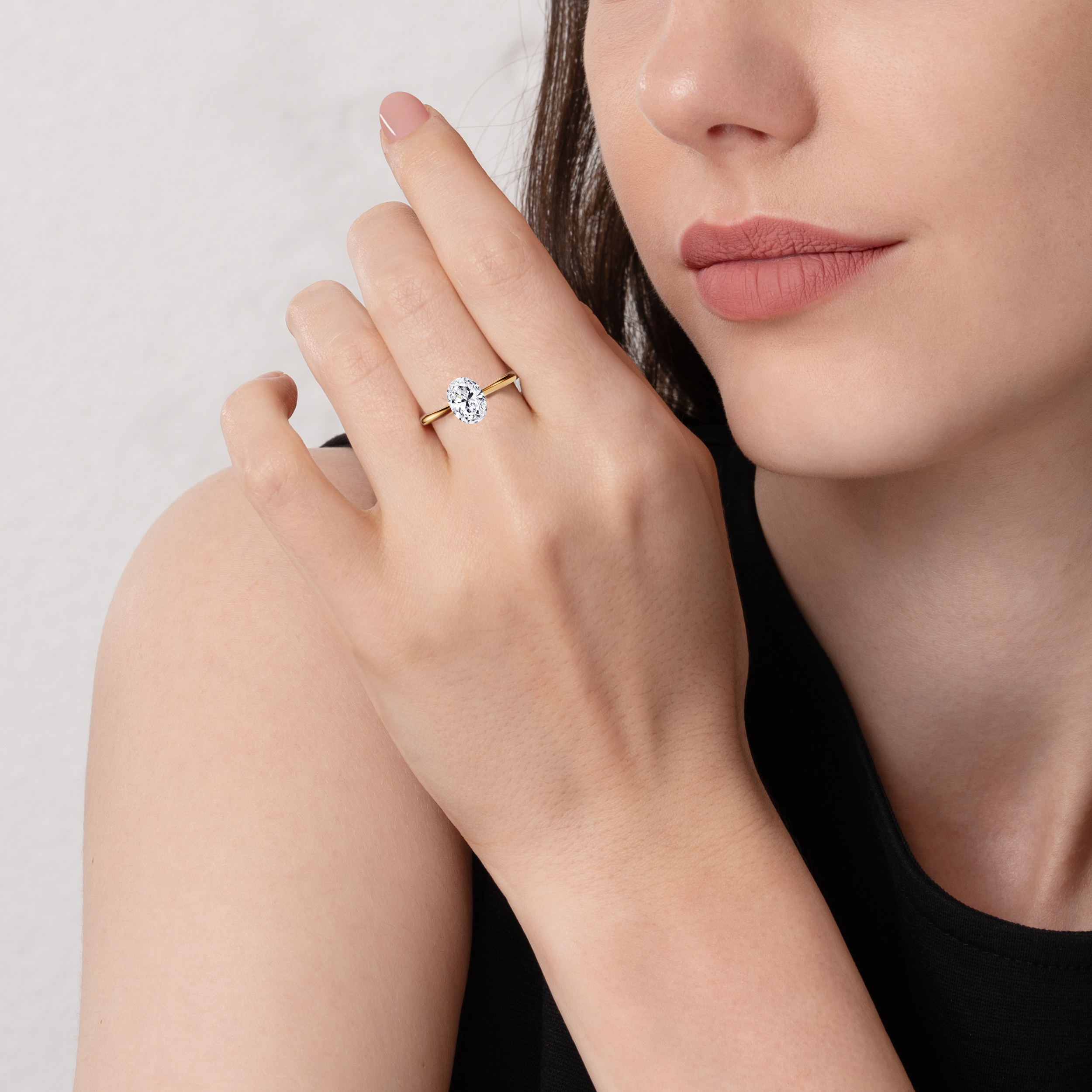
In practice, this changes how you compare lab diamond jewelry. Two stones with the same 4Cs can look worlds apart under a loupe or even in daylight. One might have faint blue fluorescence that boosts face-up brightness outdoors; the other could show slight cloudiness under office LEDs. Settings matter too. A well-built prong setting with clean seat work keeps the girdle safe and light paths open, while a bulky bezel can choke sparkle. Future outlook? Expect more stones with mapped inclusions and spectrometer data attached to digital certificates — portable proof, not sales talk. And likely, energy-source disclosures for growth facilities will be standard (renewables vs mixed grid), making sustainability claims less fuzzy — about time.
So, what should you actually measure when you buy? Three checks help you compare options without overthinking it:
1) Optical performance: Ask for cut data or light maps (ASET/Ideal-Scope), and view the stone in varied lighting — daylight, warm indoor, cool LED. Short test. Big signal.
2) Verified identity: Get a grading report (IGI or GIA), match the laser inscription, and confirm growth method (CVD/HPHT) plus any post-growth treatment. That keeps clarity and colour honest.
3) Build and durability: Inspect setting craftsmanship, prong alignment, and polish. Tiny things like a rough girdle or uneven prongs can snag and dull brilliance over time — funny how the small stuff drives the big experience.
Bottom line: Traditional rules gave us a start; tech and transparency finish the job. Compare with your eyes, your report, and your gut, in that order. If you keep those three measures in play, you’ll spot value fast and wear it with calm confidence. For more grounded guidance, have a look at Vivre Brilliance.