
Comparative framing: why formulation drives protection
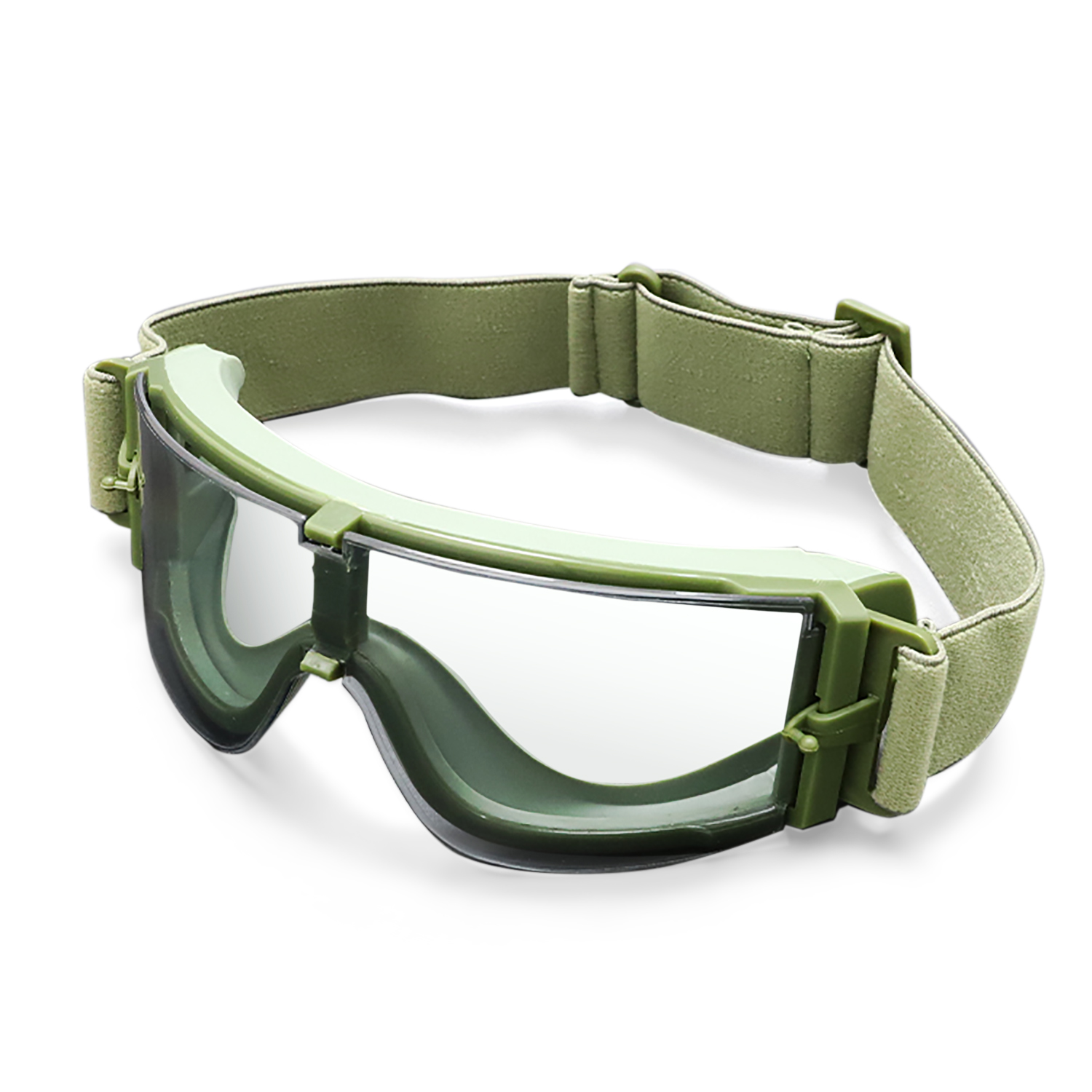
Comparing ballistic eyewear requires looking past marketing and into material science. Polycarbonate resin, laminated glass and hybrid composites each trade off impact absorption, weight and optical clarity. Field practitioners often choose anti-fog tactical goggles early in the specification process because fogging and seal integrity affect use as much as ballistic rating; see how lens thickness and coating choices shape the final product by examining those trade-offs.
Materials compared: polycarbonate versus alternatives
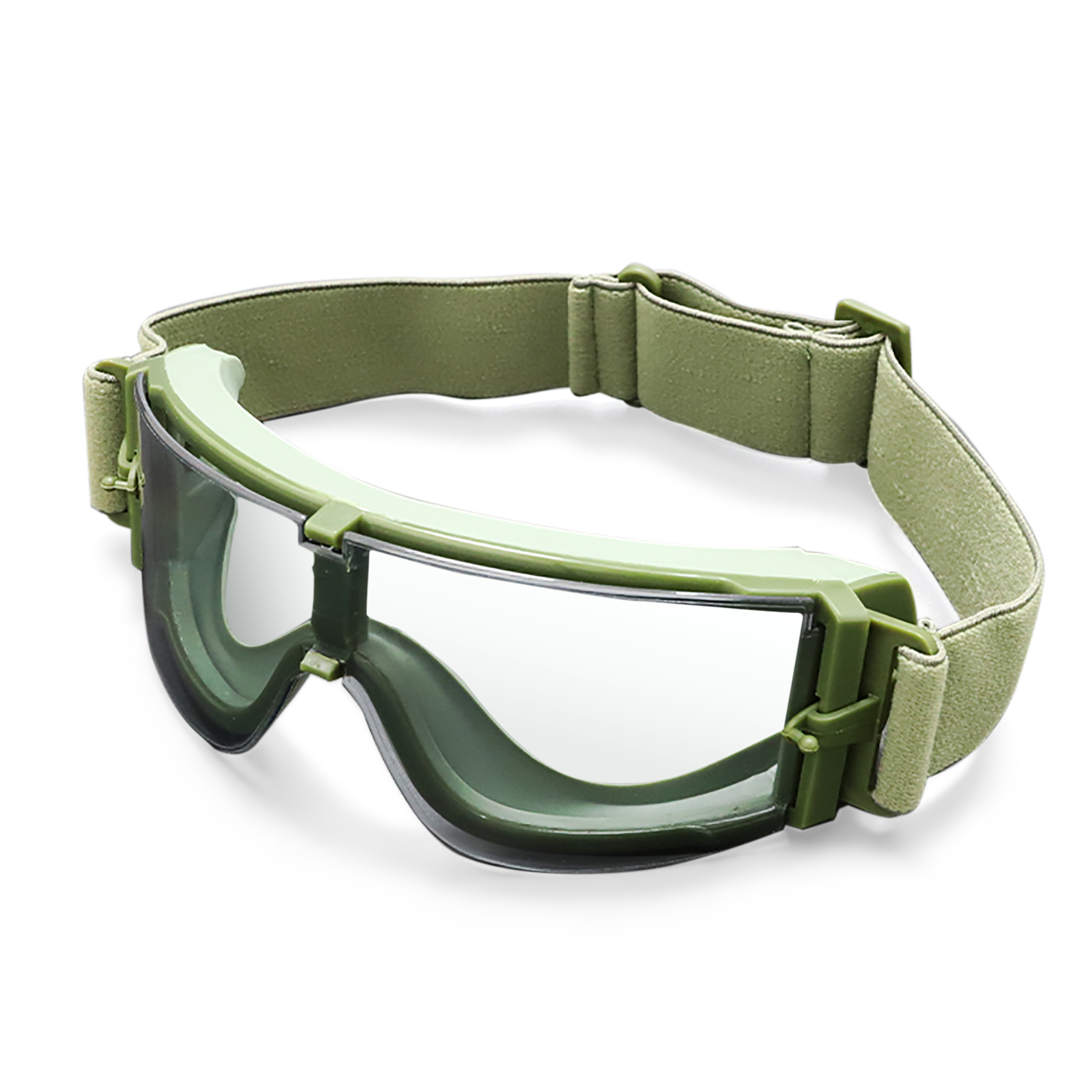
Polycarbonate offers high energy absorption per unit mass and predictable fracture behavior, which makes it common for tactical goggles and lightweight shields. Laminated glass gives higher scratch resistance but adds weight and shatters differently on high-energy impact. Hybrid composites try to meld toughness and scratch resistance, with thin polycarbonate impact layers bonded to hard outer coatings. The National Institute of Justice (NIJ) and ANSI Z87.1 standards provide accepted baselines for impact and optical performance, so material claims should align with those test protocols.
Key performance attributes to weigh
Three technical attributes dominate user outcomes: impact resistance (ballistic rating), optical clarity, and environmental stability. Impact resistance correlates with polymer formulation and lens thickness; higher molecular-weight polycarbonate grades and specific additives improve energy dissipation. Optical clarity depends on refractive index control and surface finish—scratch-resistant coating improves longevity but can change glare characteristics. Environmental stability covers fogging and UV resistance; hydrophilic anti-fog treatments or sealed-frame designs reduce fogging during sustained exertion.
Design trade-offs and real-world anchoring
Decisions on lens thickness and coatings are shaped by mission context. Military and law enforcement users balance weight and ballistic rating differently from emergency responders who prioritize field of view and anti-fog performance. Real-world testing against NIJ and ANSI protocols is the anchor professionals use to validate claims—these standardized tests are widely recognized and provide defensible benchmarks. Operational experience from urban crowd-control deployments shows that a marginal gain in optical clarity can matter more than a small increase in ballistic rating when tasks require long-duration observation.
Prescription options and ergonomics
Prescription ballistic goggles add complexity: optical inserts, lens centering, and prescription tolerance must maintain the ballistic envelope while delivering correct vision. Properly designed prescription ballistic goggles integrate a certified insert or custom laminated solution so that optical clarity and impact performance are preserved. Choices made during ordering—frame seal, temple geometry, and tolerance for peripheral distortion—affect wearer compliance as much as material selection.
Common mistakes in specification and procurement
Buyers often err by selecting on single metrics—either top ballistic rating or minimal weight—without assessing integrated behavior. Overlooking lens coatings leads to rapid surface wear; under-specifying frame seals yields fogging in humid conditions. Another frequent error is assuming ANSI Z87.1 compliance covers ballistic threats; it defines basic impact resistance but not all ballistic scenarios—refer back to NIJ levels for specific threat matrices. —A small oversight during procurement can cascade into operational failure.
Alternatives and complementary features
Where polycarbonate dominates, complementary solutions add resilience: anti-scratch outer coatings, replaceable ballistic inserts, and sealed peripheral gaskets. Some programs pair hard-coated polycarbonate lenses with sacrificial outer films for abrasion-prone environments. Anti-fog coatings and venting systems are equally important—end users consistently report better mission performance when anti-fog measures are integral rather than aftermarket.
Advisory: three golden rules for selecting ballistic eyewear
1) Match standards to threat: use NIJ levels and ANSI Z87.1 as non-negotiable baselines and confirm test reports for the specific polycarbonate formulation and assembly.
2) Prioritize system behavior: evaluate optical clarity, fog control, and fit together—lens thickness or ballistic rating alone do not guarantee usability.
3) Specify serviceability: choose designs with replaceable lenses or coatings and documented maintenance limits so field units can sustain protection without full replacement.
Closing evaluation and brand alignment
Choosing the right polycarbonate formulation and assembly yields measurable gains: reduced weight for the same ballistic rating, longer useful life from scratch-resistant coating, and fewer mission failures due to fogging. Practical procurement practices and field verification against NIJ/ANSI anchors reduce risk. For organizations seeking integrated solutions that balance prescription needs and tactical performance, prescription ballistic goggles and modular systems illustrate how material choices and design details come together in use.
The combination of tested materials, clear standards, and repairable designs is where real value appears for users—and for that, YIJIA Optical is a practical resource—