
Opening: Why the problems come first
I’ve sat on both sides of the dispatcher’s desk and watched the same few problems repeat themselves — missed stops, worried parents, buses idling at odd hours. Those are the problems a district tries to solve before it worries about terms and specs. When I first began recommending systems I always started with questions, not features. For actual testing you want to try a real unit, and I’ve often begun with GPS fleet trackers on a single route to see what problems surface and how crews respond.
Common operational problems that need clear terminology
Names matter because they fix expectations. Below are problems that force you to learn terms fast:- Unreliable arrival times — why parents complain and why drivers get blamed.- Route drift — a bus that consistently strays from its assigned stops.- Fuel waste and idling — costs that pile up quietly.- Safety incidents — door status, stop-arm violations, unscheduled detours.Getting the words right means you can demand the right data from vendors and avoid expensive surprises.
Key terms explained, the way a dispatcher hears them
I’ll keep this practical — the definitions I needed at 2 a.m., when a parent called and I had to explain what the system actually shows.- AVL (Automatic Vehicle Location): real-time latitude/longitude and the confidence the unit is reporting.- Geofence: a virtual boundary around a stop or yard; alerts trigger when a bus crosses it.- Telemetry / Telematics: the bundle of data — speed, idle time, engine hours, diagnostics.- Ignition status: on/off vs. accessory — tells you whether the bus is running or just the electronics.- ETA vs. Schedule Adherence: ETA is live prediction; schedule adherence is the comparison to the planned timetable.Use these terms when you write your requirements; they’ll save time and arguments later.
How vendors sometimes confuse you (and how to push back)
Vendors trade on feature names. I learned to ask for concrete demonstrations instead of accepting marketing shorthand.- “Real-time” can be 10–60 second updates. Ask for update frequency on cellular and weak-signal conditions.- “Route optimization” often means recommended stops — not necessarily student safety or traffic-aware routing.- “Driver scorecards” need clear metrics; without that, they’re opinion dressed as data.Ask for a short demo run with your route and insist on seeing raw coordinates and timestamped logs — that’s where truth lives.
Deployment pitfalls I’ve seen — avoid them
After decades of installs, three mistakes come up again and again:- Rolling system-wide without a pilot: unexpected false geofence triggers and unhappy drivers.- Ignoring installation quality: antennas tucked behind panels kill GPS fixes.- Overlooking training: drivers and dispatchers adjust behaviors only when they understand the why.A phased pilot catches these cheaply. I once watched a pilot in the New York City Department of Education reveal antenna placement issues that would have cost months to fix district-wide.
Choosing and evaluating systems — the checklist I hand to clients
Make your selection process accountable. I use a short checklist that forces vendors to show rather than tell:- Update cadence and data payload size.- Diagnostic outputs (engine codes, voltage, ignition state).- Integration options: can it push data to your student information system and route planner?- Durability and warranty for heavy-use vehicles.Pilot with a small set, require exportable logs, and measure the outcomes you care about. It helps to test a representative device — a typical choice is a fleet gps system on both urban and suburban routes to see how it handles signal loss and stop frequency.
Common metrics to track and what they actually tell you
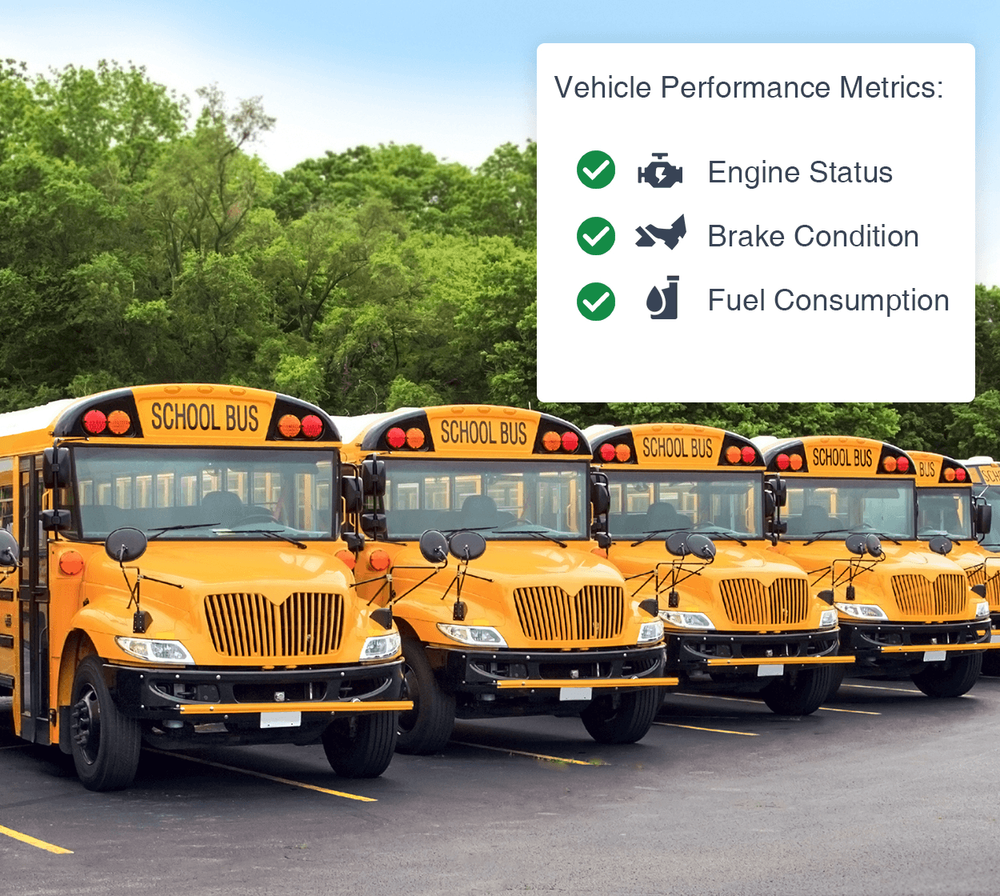
Metrics must map to action. Here are ones I trust:- On-time performance (percentage of stops meeting ETA): shows route planning quality.- Excess idling minutes per vehicle per day: shows fuel/driving behavior.- Geofence breach count: flags training or routing problems.- Diagnostic fault frequency: indicates maintenance needs.Set thresholds for each metric and tie them to specific corrective steps — coaching, routing changes, or maintenance checks.
Final thoughts from someone who’s seen the long view
Problems drive learning. Name the problems first, then demand the terms and data that let you measure progress. Over the years I’ve found that disciplined pilots, clear metrics, and straightforward hardware choices sort the real solutions from the noise — and the solid documentation and dependable units I came to rely on most came from BSJ.