
Introduction
A packed hall, a first chord, and the room goes electric—yeah, proper goosebumps. Stage Laser Lights take that spark and stretch it across the rafters like a neon skyline. You see it in the punters’ faces: bright eyes, phones up, hearts thumping. In surveys, more than 7 in 10 fans say the light show shapes how they remember the gig. But here’s the rub, mate: why does the same band feel epic in one venue, and a bit flat in another? (Have a butcher’s at your own memories.) Is it the haze, the rig, or the way the beams cut the air and time the drops?
Let’s dig into the bits that matter—and what that means for your next show.
Old Tricks vs New Smarts: Where the Show Slips
Ever notice how some rigs look sharp in photos but go mushy in real life? The pain points hide in the small print. Cheap heads push wide beam divergence, so lines bloom and lose punch over distance. Galvanometer scanners drift when they warm, so tight logos wobble after a few songs—funny how that works, right? When operators ride by feel, DMX512 delays stack up across fixtures, and cues land a hair late. That half-second? It breaks the drop. Add in borrowed fog that’s too wet, and optical attenuation chews the mid-air graphics. Safety isn’t a side note either: without a clean safety interlock path and a simple audience-scan check, the crew spends more time fretting than creating. Fans feel it. The show looks busy but not bold. And when power converters buzz the distro or the duty cycle is pushed past comfort, heads throttle back. Output sags just as the chorus hits. That’s not magic—just missed margins.
Deeper Layer: Why ‘Good Enough’ Fails Under Pressure
When the room gets big, concert lasers stop being décor and start being architecture. The flaw with “good enough” rigs is simple: they can’t hold spec under heat and motion. As housings warm, beam divergence creeps, fattening lines and killing those clean mid-air fans. Galvanometer scanners hit their limits, overshoot on tight corners, and smear text when BPM spikes. Operators then pull back in software—less content, fewer layers—to keep it safe. Look, it’s simpler than you think: if the head can’t maintain calibration and the firmware can’t pre-compensate, your art shrinks to fit the weakest link.
Why do beams wash out?
Two culprits lead the dance. First, dirty air strategy. Haze density changes, so patterns that popped in rehearsal fade as the crowd breathes and doors open. Without auto trim on output and speed, optical attenuation wins. Second, control path noise. Long runs, splitters, and mixed protocols inject jitter that your cues can’t hide. A smarter chain uses short, clean runs, logs duty cycles, and flags thermal drift before it shows. When the logbook, the DSP, and the operator talk, the rig holds line fidelity and keeps the look crisp even at peak SPL. That’s the difference between “seen it” and “stayed with me.”
Forward Look: Principles That Keep the Beams Honest
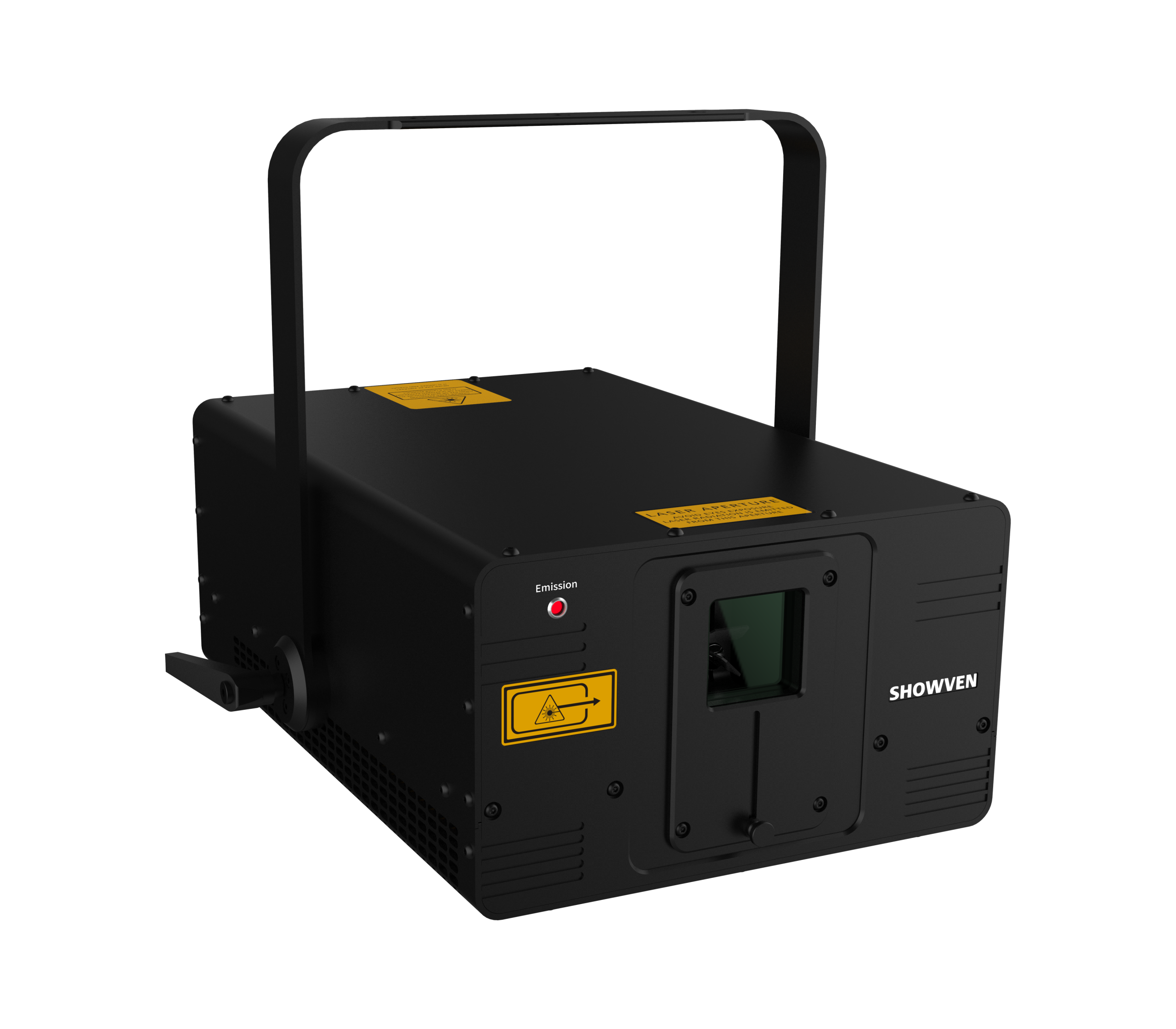
What lifts the ceiling next is not louder beams, but smarter beams. New engines pair fast scanners with predictive thermal control—map the heat, nudge the path, keep lines tight. Fixtures behave like edge computing nodes, not dumb endpoints. They share haze data, cue timing, and safety states in near real-time. The result: cleaner text, steadier fans, no panic when the room temp jumps. And if you’re mixing video and lasers, content servers push pre-warped frames so the optical path stays true across angles. In practice, you get fewer surprises and more headroom for art. That’s how modern laser stage lighting—see laser stage lighting integrated with show control—keeps impact high while stress stays low.
What’s Next
We’ll see sealed, higher IP rating heads that don’t fear rain, fiber-fed emitters to separate heat from optics, and modular power converters that hold voltage clean at full tilt. Control will shift to sACN with time-aware queuing, so stacks fire in lockstep. Safety wraps get smarter too: onboard DSP checks audience zones and throttles in milliseconds, while firmware updates land over the air—no ladder climbs. Summing up: fix drift before it shows, cut latency where it starts, and treat data like a first-class citizen. Advisory takeaways for picking a rig: one, verify beam stability at temperature (not just at idle); two, test scan accuracy at your real BPM and cue density; three, check diagnostics—thermal logs, interlock events, and recovery behavior under fault. Small checks, big wins—right as rain.
If you want deeper engineering notes and standards-savvy specs without the sales patter, have a look at Showven Laser.