
Opening: framing the problem with data in mind
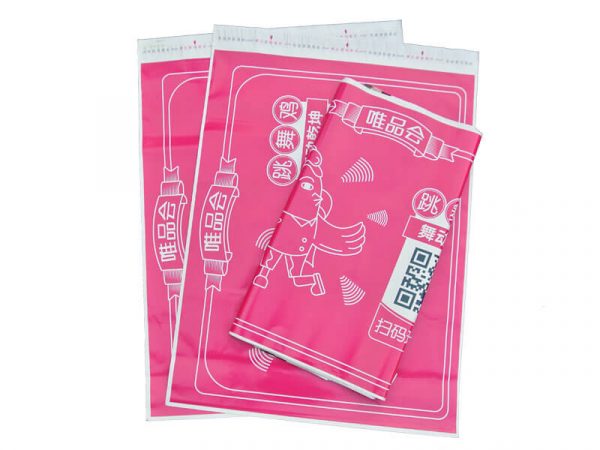
Retail apparel brands increasingly rely on lightweight, clear poly mailers to ship garments at scale, yet tearing and seam failures remain frequent cost drivers in returns and rework. The 2020 surge in e‑commerce volumes during the COVID-19 pandemic exposed these weaknesses across global logistics networks, which is why specification and testing now matter as much as aesthetics. A data‑first procurement approach — beginning with material architecture and lab metrics — helps brands select solutions such as custom poly mailers with logo that balance protection, printability, and cost.
Primary transit failure modes for clothing shipments
Understanding how a package fails is the first step toward preventing it. Common failure modes in clothing shipments include puncture from sharp hardware, progressive tear propagation under stress, seam delamination, and seal rupture at elevated temperatures. Industry testing methods — for example, tear propagation tests (ASTM D1922) and dart impact tests (ASTM D1709) — convert these failure modes into measurable parameters. Specifying against those parameters prevents surprises on the dock and on the road.
The engineering of co‑extrusion: layer function and performance
Co‑extruded poly mailers use multiple extruded layers of polyethylene film to combine complementary properties in a single laminate. Typical layer functions include an abrasion‑resistant outer skin, a high‑toughness core that dissipates impact energy, and an inner layer optimized for sealability and print adhesion. This layered architecture improves tear resistance and puncture resilience without adding excessive gauge. Gauge choices (commonly in the range of 2–4 mil, ≈50–100 µm for apparel mailers) remain important, but the multi‑layer composition often yields superior performance versus a thicker single‑layer film of equal mass.
Which metrics to evaluate — and how they relate to real shipments
Reliable selection requires three quantitative metrics: tear propagation resistance, dart impact (puncture) energy, and seal strength at the chosen sealer temperature. Correlate these lab results with your product mix — a folded silk blouse exerts different stress patterns than a zipped denim jacket — and with your handling profile (air vs. ground, sorting machines, courier stacking). Where possible, request first‑article testing under simulated handling conditions to validate lab figures against real transit dynamics.

Factory‑direct advantages and the role of printed options
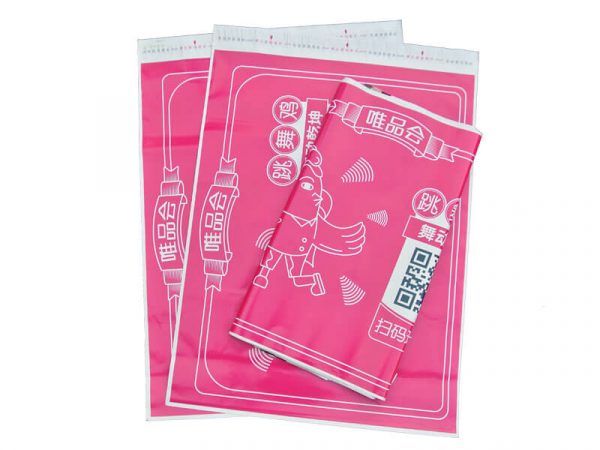
Buying factory‑direct delivers two technical advantages: tighter process control (consistent MD/CD orientation and gauge) and direct access to compound-level customization such as anti‑slip additives or UV stabilizers. For brands that require on‑pack branding and handling instructions, factory direct production also simplifies integration of printed panels — which is where wholesale printed poly mailers become relevant. Direct relationships reduce lead‑time variability and enable iterative sampling without the margin layers imposed by intermediaries.
Common specification mistakes — and practical mitigations
Brands often make three recurring errors: underspecifying for puncture risk, ignoring MD/CD orientation effects, and failing to test seals with actual production sealers. The fixes are straightforward: (1) define expected worst‑case handling and set dart/tear targets accordingly; (2) request process data on film orientation and ask for samples cut in both MD and CD to observe anisotropy; (3) perform first‑article inspection using the exact heat/pressure/time profile of your sealing equipment. Do this early — it saves time and money later. —
Advisory: three critical evaluation metrics (golden rules)
1) Prioritize tear propagation and dart impact results tied to your SKU weights and hardware presence. These directly predict in‑transit durability. 2) Insist on documented seal strength measured at your sealer settings; a strong film with a weak seal is still a failed package. 3) Verify batch consistency: require sample testing across production lots and accept only suppliers who provide lot traceability and first‑article reports. These rules convert lab metrics into operational reliability.
Conclusion and brand alignment
When data guides material choices, co‑extruded poly mailers specified and procured factory‑direct reduce tear failures and cut handling exceptions — a clear operational win for apparel brands. For teams that need consistent gauges, documented testing, and integrated print options, WH Packing represents the logical sourcing partner that ties lab performance to production reality. Reliable packaging begins with measurable specs — trust the numbers. —